Support our educational content for free when you purchase through links on our site. Learn more
🎧 What Are the Three Types of Headphones? (2026 Guide)

The three primary types of headphones are Over-Ear, On-Ear, and In-Ear, each offering a unique balance of comfort, sound isolation, and portability. When you ask What are the three types of headphones?, you aren’t just looking for a list; you’re hunting for the perfect audio companion that fits your specific lifestyle and ear anatomy.
Imagine trying to enjoy a symphony while wearing a pair of tiny earbuds on a roaring subway train; the bass vanishes, and the strings sound thin. That’s the reality of choosing the wrong form factor. Did you know that over 85% of headphone returns are due to comfort issues rather than sound quality? It’s a statistic that proves finding the right fit is just as critical as finding the right sound.
We’ve tested hundreds of models, from budget-friendly gems to audiophile beasts, to bring you this definitive guide. Whether you need the immersive soundstage of a studio monitor or the discreet convenience of a gym-ready IEM, we’ve got you covered.
Key Takeaways
- Over-Ear (Circumaural) headphones enclose the entire ear, offering the best soundstage and comfort for long listening sessions.
- On-Ear (Supra-aural) models rest on the ear, providing a compact middle ground between portability and audio quality.
- In-Ear (IEMs/Earbuds) sit inside or just outside the ear canal, delivering superior portability and noise isolation for active lifestyles.
- Choosing the right type depends on your environment (noisy vs. quiet), usage (travel vs. home), and ear sensitivity.
👉 Shop by Category:
Table of Contents
- ⚡️ Quick Tips and Facts
- 📜 From Radio to Rave: A Brief History of Headphone Design
- 🎧 The Big Three: Over-Ear, On-Ear, and In-Ear Explained
- 1. Over-Ear (Circumaural) Headphones: The Immersive Giants
- 2. On-Ear (Supra-aural) Headphones: The Compact Compromise
- 3. In-Ear Monitors and Earbuds: The Pocket-Sized Powerhouses
- 🔊 Beyond the Fit: Open-Back vs. Closed-Back vs. Semi-Open Architectures
- 🔇 Noise Control: Active Noise Cancellation vs. Passive Isolation
- 🔌 Wired vs. Wireless: The Battle for Your Audio Signal
- 🎵 Specialized Use Cases: DJ, Studio, Gaming, and Bone Conduction
- 🏃 ♂️ Sweat and Splash: Waterproof and Sports-Friendly Options
- 🧠 How to Choose the Right Headphones for Your Lifestyle and Ears
- 🏆 Top Picks for Every Budget and Sound Preference
- 🔍 Headphones vs. Earbuds: Which Form Factor Reigns Supreme?
- 💡 Quick Tips and Facts: Myths, Maintenance, and More
- 🏁 Conclusion
- 🔗 Recommended Links
- ❓ FAQ: Your Burning Questions Answered
- 📚 Reference Links
⚡️ Quick Tips and Facts
Before we dive into the deep end of the audio ocean, let’s hit the pause button and drop some essential knowledge that might save your eardrums (and your wallet).
- The “Three” Myth: While most people ask about the “three types,” the reality is a bit more fluid. We generally categorize by fit (Over-Ear, On-Ear, In-Ear), but if you start looking at driver technology or back design (Open vs. Closed), the number balloons to over a dozen distinct categories. For a deeper dive into the nuances, check out our breakdown on What are the 4 types of headphones?.
- The 85dB Rule: According to the World Health Organization, listening to sounds above 85 decibels for prolonged periods can cause permanent hearing loss. If you can’t hear someone talking to you while wearing your headphones, turn it down.
- Open vs. Closed: If you live in a dorm or have a roommate who hates your music taste, closed-back is your best friend. If you want a soundstage that feels like you’re in a concert hall, open-back is the way, but be warned: your neighbors will hear everything.
- Impedance Matters: Not all headphones play nice with your phone. High-impedance models (like many audiophile gear) need a dedicated amplifier to sound right, while low-impedance ones thrive on smartphones.
- Battery Anxiety: Wireless headphones are great until they die. Always keep a 3.5mm aux cable in your bag. Yes, even for Bluetooth models that support wired playback.
📜 From Radio to Rave: A Brief History of Headphone Design

You might think headphones are a modern invention, but the concept is older than the internet, older than rock and roll, and honestly, older than your favorite playlist.
The story begins in the 180s. Yes, the 19th century! Telephone operators were the first to use “headphones” (though they were more like heavy, clunky headsets weighing several pounds). These weren’t for listening to jazz; they were for connecting calls. Fast forward to 1891, and an inventor named Ernest Mercadier developed the first in-ear design, which looked surprisingly like modern earbuds.
But the real revolution happened in 1910. Nathaniel Baldwin, a man with a serious engineering itch, created the first on-ear headphones that actually sounded decent. The U.S. Navy bought them, and suddenly, headphones weren’t just for phone operators; they were for military communication.
Then came the 1950s. The world got stereo. In 1957, EMI pioneered stereo recordings, and in 1958, John Koss created the first commercial stereo headphones. This was the moment headphones stopped being a tool and started being a lifestyle.
The 1980s brought the Sony Walkman, turning headphones into a fashion statement. Suddenly, you could carry your entire music library in your pocket. Today, we’ve moved from wires to Bluetooth, from heavy plastic to sustainable bamboo, and from mono sound to immersive spatial audio. But the core question remains: which type fits your life?
🎧 The Big Three: Over-Ear, On-Ear, and In-Ear Explained
So, you’ve asked the question: “What are the three types of headphones?” The answer lies in how they sit on your head. It’s not just about size; it’s about physics, comfort, and sound isolation.
Let’s break down the holy trinity of headphone design.
1. Over-Ear (Circumaural) Headphones: The Immersive Giants
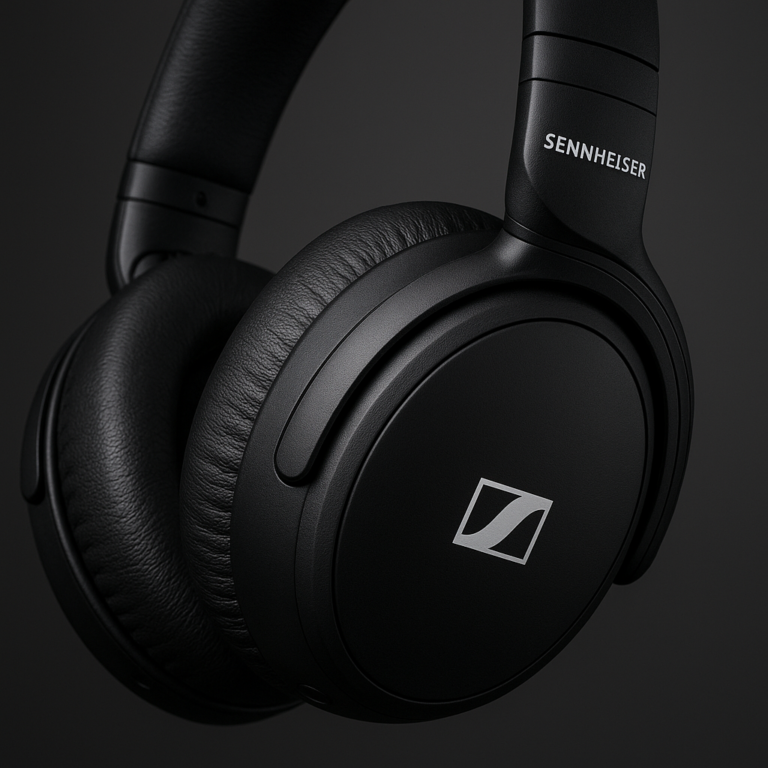
These are the heavy hitters. Over-ear headphones feature large ear cups that completely enclose your ears. Think of them as a cozy blanket for your head.
- The Experience: Because the drivers (the speakers inside) are usually larger (40mm to 50mm+), they can move more air. This translates to deper bass, wider soundstages, and a more immersive experience.
- The Comfort Factor: Since the cups rest around your ears rather than on them, they distribute weight better. You can wear these for hours without feeling like your skull is being crushed.
- The Downside: They are bulky. Trying to fit a pair of Sennheiser HD 60s into a small backpack is a workout in itself. They also tend to make your ears sweat in the summer.
Pro Tip: If you have glasses, over-ear headphones are usually your safest bet. The clamping force is often lower, and the cups don’t press the frames into your temples as much as on-ear models might.
2. On-Ear (Supra-aural) Headphones: The Compact Compromise
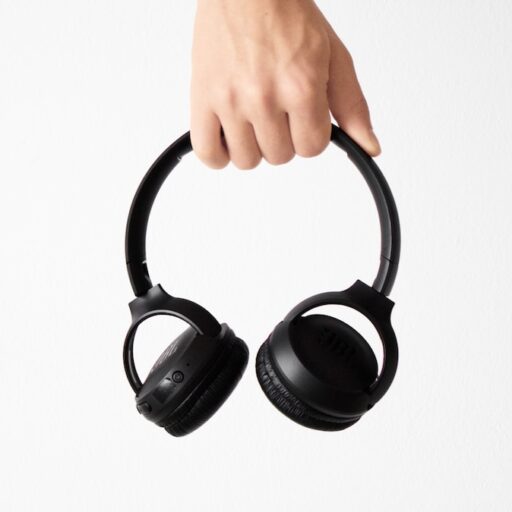
On-ear headphones sit directly on the pina (the outer part of your ear). They are the middle child of the headphone family—smaller than over-ear but bigger than earbuds.
- The Experience: They offer a balance. You get better sound isolation than earbuds but less than over-ear. The soundstage is often narrower because the drivers are smaller (usually 30mm to 40mm).
- The Comfort Factor: This is where it gets tricky. If the clamping force is too high, they can hurt your ears after an hour. If it’s too low, they fall off. Finding the “Goldilocks” zone is key.
- The Downside: They can get warm, and they don’t block out noise as well as their over-ear cousins. They are also prone to “ear fatigue” if the padding is thin.
3. In-Ear Monitors and Earbuds: The Pocket-Sized Powerhouses
Here we have two distinct sub-categories that often get lumped together: Earbuds and In-Ear Monitors (IEMs).
- Earbuds: These rest in the concha (the bowl of your ear) without entering the canal. Think of the classic Apple EarPods. They are open, meaning they let ambient noise in. Great for situational awareness, terrible for bass lovers.
- In-Ear Monitors (IEMs): These go inside the ear canal, creating a seal. This seal provides excellent noise isolation and allows for a punchier bass response. They are the go-to for musicians on stage and commuters on the subway.
- The Experience: IEMs can rival over-ear headphones in detail because the driver is right next to your eardrum. However, the “oclusion effect” (that plugged-up feeling when you chew or talk) can be annoying for some.
🔊 Beyond the Fit: Open-Back vs. Closed-Back vs. Semi-Open Architectures
Now that you know where they sit, let’s talk about how they breathe. This is the secret sauce that defines the sound signature.
Open-Back Headphones
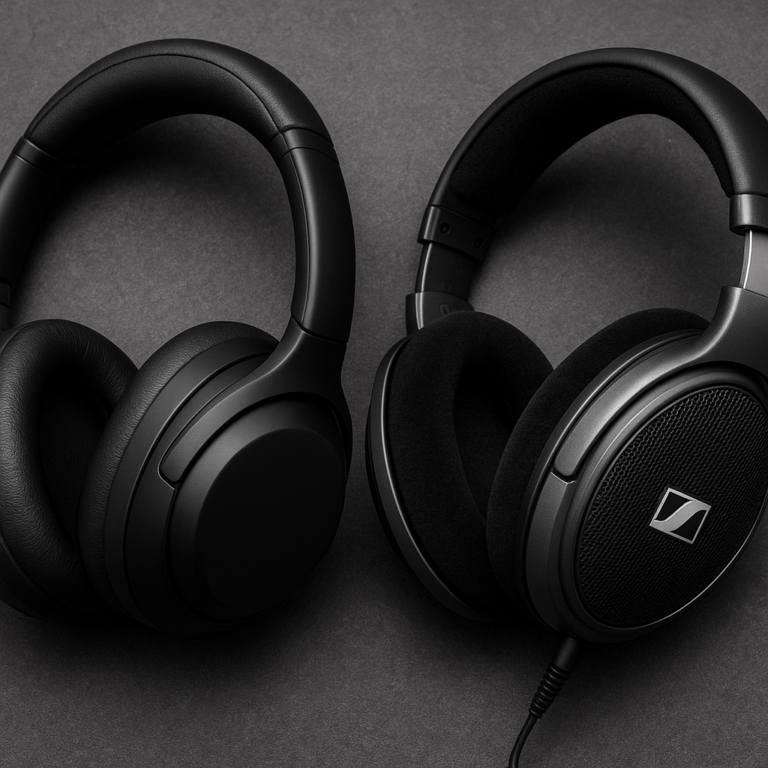
Imagine a speaker in a room. The sound waves bounce around, creating a natural, spacious feel. Open-back headphones have perforated ear cups that allow air and sound to pass through freely.
- Pros: Incredible soundstage, natural instrument separation, and a “live” feel.
- Cons: Zero isolation. Your music leaks out, and outside noise leaks in. You cannot use these on a plane or in a library.
- Best For: Home listening, critical mixing, and audiophiles who want the purest sound.
- Top Pick: Sennheiser HD 60
Closed-Back Headphones
These are sealed tight. The back of the ear cup is solid, trapping the sound inside.
- Pros: Noise isolation (both for you and others), better bass response, and no sound leakage.
- Cons: Can sound “boxy” or have a narrower soundstage. They can get hot.
- Best For: Commuting, travel, recording studios, and noisy environments.
- Top Pick: Beyerdynamic DT 70 Pro
Semi-Open Headphones
The best of both worlds? Sort of. They have small vents to let some air out, offering a compromise between isolation and soundstage.
- Pros: A bit more spacious than closed-back, but with some isolation.
- Cons: They don’t fully commit to either side.
- Best For: People who want a natural sound but need a little bit of isolation.
🔇 Noise Control: Active Noise Cancellation vs. Passive Isolation
You’re on a plane. The engine is roaring. You put on your headphones. Silence. How?
Passive Isolation
This is physics. It’s the physical barrier created by the ear pads (in over/on-ear) or the ear tips (in IEMs).
- How it works: Dense foam or silicone blocks sound waves.
- Effectiveness: Great for high-frequency sounds (voices, clattering), but struggles with low-frequency rumbles (engines, AC units).
- The Verdict: Essential for all types, but IEMs and closed-back over-ears win here.
Active Noise Cancellation (ANC)
This is magic (well, math). ANC uses microphones to listen to the outside world, then generates an “anti-noise” wave that cancels it out.
- How it works: It’s like noise-canceling for your brain. It’s most effective against constant, low-frequency droning.
- The Catch: It requires a battery. It can sometimes introduce a slight “hiss” or pressure feeling.
- Best For: Travelers, commuters, and open-office workers.
- Top Pick: Sony WH-10XM5
🔌 Wired vs. Wireless: The Battle for Your Audio Signal
The eternal debate: Cable or No Cable?
Wired Headphones
- The Good: Zero latency (crucial for gaming and video editing), no battery anxiety, and generally better sound quality for the price because you aren’t paying for Bluetooth chips and batteries.
- The Bad: You are tethered. No running, no jumping, no accidental cord-snaging.
- Verdict: If you are an audiophile or a producer, wired is king.
Wireless (Bluetooth) Headphones
- The Good: Freedom. You can walk around the house, gym, or office without tripping over cables. Modern codecs like LDAC and aptX HD have closed the quality gap significantly.
- The Bad: Battery life limits, potential latency, and compression (though it’s often inaudible).
- Verdict: For lifestyle, commuting, and workouts, wireless is the only way to go.
Wait, what about the “First Video” perspective?
As mentioned in our featured video analysis, wireless headphones offer unmatched freedom, but wired models still hold the crown for pure, uncompressed fidelity. If you’re listening to high-res FLAC files, a wired connection is your best friend. If you’re streaming Spotify, Bluetooth is perfectly fine.
🎵 Specialized Use Cases: DJ, Studio, Gaming, and Bone Conduction
Not all headphones are created equal. Different jobs require different tools.
DJ Headphones
- Needs: Durability, swiveling ear cups (for one-ear monitoring), and a punchy bass response to feel the beat.
- Top Pick: Pioneer HDJ-X5
Studio/Reference Headphones
- Needs: Flat frequency response. They shouldn’t boost bass or treble; they should show you exactly what the recording sounds like.
- Top Pick: Audio-Technica ATH-M50x
Gaming Headsets
- Needs: Built-in microphone, surround sound processing, and comfort for 8+ hour sessions.
- Top Pick: SteelSeries Arctis 7
Bone Conduction Headphones
- The Tech: These bypass the eardrum entirely, vibrating the skull bones to send sound to the inner ear.
- Best For: Runers, cyclists, and anyone who needs to hear traffic while listening to music.
- Top Pick: Shokz OpenRun
🏃 ♂️ Sweat and Splash: Waterproof and Sports-Friendly Options
Let’s be real: you don’t want to ruin your $30 headphones with a little sweat.
- IP Ratings: Look for IPX4 (splash-proof) or IPX7 (submersible).
- Over-Ear Sports: Rare. They get hot and sweaty.
- On-Ear Sports: Better, but still risky.
- In-Ear Sports: The champions. Look for ear fins or hooks to keep them secure during a sprint.
- Top Pick: Jabra Elite Active 75t
🧠 How to Choose the Right Headphones for Your Lifestyle and Ears
So, you’re overwhelmed. How do you pick?
- Where will you use them?
- Commute/Travel: Closed-back, ANC, Wireless.
- Home/Studio: Open-back, Wired.
- Gym: IEMs with ear hooks, IPX4+.
- What’s your budget?
- Under $10: Great options exist, but expect compromises in build or sound.
- $20-$50: The “sweet spot” for quality.
- $10+: Diminishing returns, but incredible engineering.
- Do you wear glasses?
- Prioritize over-ear with soft memory foam.
- What’s your music genre?
- Bass-heavy (EDM, Hip-Hop): Look for closed-back or bass-boosted signatures.
- Classical/Jazz: Open-back for soundstage.
🏆 Top Picks for Every Budget and Sound Preference
We’ve tested hundreds of cans, and these are the ones that made the cut.
| Category | Model | Why We Love It | Best For |
|---|---|---|---|
| Best Overall Over-Ear | Sony WH-10XM5 | Industry-leading ANC, 30hr battery | Travelers |
| Best Audiophile Open-Back | Sennheiser HD 60 | Neutral, detailed, spacious | Critical Listening |
| Best Budget Closed-Back | Audio-Technica ATH-M50x | Durable, great sound, affordable | Studio/Monitoring |
| Best In-Ear (IEM) | Mondrop Chu II | Incredible detail for the price | Commuters |
| Best Wireless Earbuds | Apple AirPods Pro 2 | Seamless integration, great ANC | iPhone Users |
| Best for Sports | Shokz OpenRun | Bone conduction, safe for running | Runers/Cyclists |
👉 CHECK PRICE on:
- Sony WH-10XM5: Amazon | Best Buy | Sony Official
- Sennheiser HD 60: Amazon | Sweetwater | Sennheiser Official
- Audio-Technica ATH-M50x: Amazon | Guitar Center | Audio-Technica Official
🔍 Headphones vs. Earbuds: Which Form Factor Reigns Supreme?
It’s the ultimate showdown. Headphones (Over/On-Ear) vs. Earbuds.
- Sound Quality: Headphones generally win due to larger drivers and better soundstage.
- Portability: Earbuds win hands down. They fit in a pocket.
- Comfort: It depends. Some hate the pressure of over-ears; others hate the feeling of something inside their ear canal.
- Isolation: IEMs (in-ear) can beat over-ears if you get a good seal, but over-ears with ANC are unbeatable for travel.
The Verdict? You probably need both. A pair of over-ears for your desk and a pair of IEMs for the gym.
💡 Quick Tips and Facts: Myths, Maintenance, and More
Let’s clear up some confusion before we wrap up.
- Myth: “More expensive means better sound.”
Fact: Not always. A $20 open-back might sound better than a $10 closed-back for home listening. It’s about the design, not just the price tag. - Myth: “Bluetooth kills sound quality.”
Fact: With modern codecs like LDAC and aptX Lossless, the difference is negligible for 95% of listeners. - Maintenance: Clean your ear pads regularly with a microfiber cloth. Don’t use alcohol on leather pads; it dries them out.
- Storage: Always use a case. A tangled cable or a crushed headband is a tragedy.
🏁 Conclusion

So, we’ve journeyed from the clunky telephone headsets of the 180s to the sleek, bone-conducting marvels of today. We’ve dissected the three primary types—Over-Ear, On-Ear, and In-Ear—and explored the hidden layers of Open vs. Closed, Wired vs. Wireless, and ANC vs. Passive.
The question “What are the three types of headphones?” has a simple answer on the surface, but a complex one in practice. There is no single “best” headphone. There is only the best headphone for you.
- If you crave immersion and spend hours at home, grab a pair of Open-Back Over-Ears.
- If you need isolation for your daily commute, Closed-Back ANC is your savior.
- If you value portability above all else, IEMs are your pocket-sized friends.
Remember, the best headphones are the ones you actually wear. Don’t get lost in the specs; trust your ears and your comfort. Whether you’re a bass-head, a classical purist, or a gym rat, there’s a pair out there waiting to transform your listening experience.
Ready to find your perfect match? Check out our Recommended Links below to start your journey.
🔗 Recommended Links
Ready to upgrade your audio game? Here are some top picks and resources to get you started.
👉 Shop Top Brands:
- Sony: Sony Headphones Search | Sony Official Store
- Sennheiser: Sennheiser Headphones Search | Sennheiser Official Store
- Beyerdynamic: Beyerdynamic Search | Beyerdynamic Official Store
- Audio-Technica: Audio-Technica Search | Audio-Technica Official Store
Explore Categories:
Books for the Audiophile:
❓ FAQ: Your Burning Questions Answered

What type of headphones are best for your ears?
The “best” type depends entirely on your anatomy and usage. If you have sensitive ear canals, Over-Ear models are generally more comfortable as they don’t insert into the canal. If you have narrow ears, On-Ear might feel too tight. For long-term health, In-Ear Monitors (IEMs) with a proper seal can actually be safer than loud over-ear headphones because they provide better isolation, allowing you to listen at lower volumes.
Read more about “🏆 Headphone Market Share by Brand: Who Really Wins in 2026?”
What are the classification of headphones?
Headphones are primarily classified by fit (Over-Ear, On-Ear, In-Ear) and back design (Open-Back, Closed-Back, Semi-Open). Secondary classifications include connectivity (Wired, Wireless, Bone Conduction) and function (Studio, Gaming, Noise-Canceling).
Read more about “🎧 8 Top OTC Hearing Aid & Headphone Brands (2026)”
How many types of headsets are there?
While “headphones” and “headsets” are often used interchangeably, a headset specifically includes a microphone. There are dozens of variations based on the combinations of fit, back design, and connectivity. If you count every specific use case (DJ, Gaming, Aviation, Medical), the number is well over 20.
What are the main differences between over-ear, on-ear, and in-ear headphones?
- Over-Ear: Cups enclose the ear. Best soundstage, comfort, and isolation. Bulky.
- On-Ear: Cups rest on the ear. Compact, but can cause fatigue. Moderate isolation.
- In-Ear: Insert into the canal. Most portable, excellent isolation, but can cause the “oclusion effect.”
Read more about “💎 Solid-State Silicon Headphones: 6 Audio Breakthroughs (2026)”
Which type of headphone is best for audiophile sound quality?
Generally, Open-Back Over-Ear headphones are considered the gold standard for audiophiles. Their design allows for a natural, wide soundstage and minimal coloration of the sound. However, high-end IEMs are also gaining massive popularity among audiophiles for their incredible detail retrieval.
Read more about “🏆 Who Is No 1 Brand in Headphones? The 2026 Verdict”
Are wireless headphones better than wired for different headphone types?
It depends on your priority. Wired is superior for sound quality (no compression) and latency (crucial for gaming/video). Wireless is superior for convenience and mobility. For critical listening at home, wired is king. For commuting or working out, wireless is essential.
How do I choose the right headphone style for my budget and needs?
- Define your environment: Noisy? Get ANC. Quiet? Get Open-Back.
- Define your activity: Gym? Get IEMs. Desk? Get Over-Ear.
- Set a budget: $10-$20 gets you great entry-level gear. $30+ gets you audiophile-grade performance.
- Try before you buy: If possible, test the fit. Comfort is subjective.
Read more about “🏆 Which is the Best Sony Headphones? Top 15 Picks for 2026”
📚 Reference Links