Support our educational content for free when you purchase through links on our site. Learn more
🎧 Who Invented the First Headphones? The 1910 Kitchen Miracle

Who actually invented the first headphones? Was it a tech giant, a government lab, or a lone genius cooking up a revolution in his kitchen? The answer might surprise you. While many assume modern audio began with the iPod or the Walkman, the true origin story dates back to 1910 and a man named Nathaniel Baldwin. He didn’t have a massive budget or a team of engineers; he had a kitchen table, some spare parts, and a desperate need to hear church sermons clearly.
In this deep dive, we unravel the mystery of the first binaural headset, debunk the myths surrounding its creation, and trace the incredible journey from a single-ear telegraph receiver to the noise-canceling marvels we use today. You’ll discover why Baldwin’s refusal to mass-produce nearly erased his name from history, how John C. Koss later turned headphones into a music lover’s dream, and the surprising role the U.S. Navy played in popularizing personal audio. By the end, you’ll never look at your earbuds the same way again.
Key Takeaways
- Nathaniel Baldwin is credited with inventing the first practical, binaural headphones in 1910, crafting them by hand in his Utah kitchen.
- Before Baldwin, early devices were often single-ear or required users to hold them up, making his head-mounted design a revolutionary leap in personal audio.
- The U.S. Navy was the first major adopter, utilizing Baldwin’s superior clarity for radio communication during World War I.
- John C. Koss transformed the industry in 1958 by introducing stereo headphones, shifting the focus from utility to immersive music listening.
- From balanced armature drivers to modern Active Noise Cancellation (ANC), the evolution of headphone technology has been driven by a quest for better sound and comfort.
Table of Contents
- ⚡️ Quick Tips and Facts
- 🎧 The Mystery of the First Headphones: Who Actually Invented Them?
- 🕰️ From Telegraph to Stereo: A Deep Dive into Headphone History
- 👨 🔬 Nathaniel Baldwin: The Eccentric Inventor Behind the First Personal Audio
- 📜 The Evolution of Headphone Technology: 7 Key Milestones That Changed Sound Forever
- 🛠️ How Early Headphones Worked: The Science Behind the Sound
- 🌍 From Navy Communication to Music Lovers: The Commercialization of Headphones
- 🎵 The Rise of the Stereo Headphone and the Birth of Personal Listening
- 🔊 Modern Headphone Innovations: Wireless, Noise-Canceling, and Beyond
- 🤔 Common Myths and Misconceptions About the Invention of Headphones
- 📊 Comparison: Vintage vs. Modern Headphone Designs and Sound Quality
- 💡 Quick Tips and Facts: Essential Headphone Trivia You Need to Know
- 🏆 Conclusion: The Legacy of the First Headphones
- 🔗 Recommended Links: Where to Learn More About Audio History
- ❓ FAQ: Frequently Asked Questions About the First Headphones
- 📚 Reference Links: Sources and Further Reading
⚡️ Quick Tips and Facts
Before we dive into the dusty archives of audio history, let’s hit the rewind button on some myths you might have heard. Here are the hard truths about the invention of headphones, straight from the lab bench at Headphone Brands™:
- It wasn’t for music: The very first “headphones” weren’t designed for your favorite playlist. They were built for telegraph operators and the U.S. Navy to hear radio signals clearly without disturbing others. 📻
- The Kitchen Lab: The inventor, Nathaniel Baldwin, didn’t have a high-tech R&D facility. He built the first successful dual-ear prototype in his kitchen in Utah, using nothing but his own ingenuity and some spare parts. 🍳
- The “One-Ear” Confusion: Before 1910, devices existed, but they were often single-ear “headphones” (singular). The binaural (two-ear) design that defines modern headphones is Baldwin’s claim to fame.
- Mass Production Myth: Baldwin handcrafted the first order of 10 units himself. He refused to mass-produce them, which is why you won’t find a “Baldwin 1910” on a shelf today.
- The Stereo Shift: While Baldwin invented the form factor, John C. Koss invented the experience we know today by introducing stereo sound in 1958.
Did you know? The term “headphone” wasn’t even a compound word until around 1909. Before that, they were called “head telephones” or just “receivers.”
🎧 The Mystery of the First Headphones: Who Actually Invented Them?
If you ask a random person on the street, “Who invented the first headphones?” you’ll likely get a shrug or a guess about Steve Jobs. But the answer is far more eccentric and rooted in the early 20th century.
The story of the first headphones is a tale of two inventors and a technological evolution that spans decades. While Ernest Mercadier patented an in-ear device in 1891, and the British company Electrophone created a dual-ear system in the 1890s, the title of “Father of the Modern Headphone” usually goes to Nathaniel Baldwin.
Why the confusion? Because “first” is a slippery term.
- First In-Ear? Ernest Mercadier (1891).
- First Dual-Ear System? Electrophone (1890s).
- First Practical, Binaural Headset? Nathaniel Baldwin (1910).
At Headphone Brands™, we believe Baldwin takes the crown because his design introduced the balanced armature driver and the binaural form factor that we still use today. His invention wasn’t just a novelty; it was a functional breakthrough that solved a critical problem for the U.S. Navy.
But how did a guy in a kitchen change the world of audio forever? Let’s peel back the layers of history.
🕰️ From Telegraph to Stereo: A Deep Dive into Headphone History
The journey from a clunky telegraph receiver to the sleek noise-canceling buds in your pocket is a rollercoaster of innovation. Let’s trace the timeline.
The Pre-1910 Era: The Single-Ear Struggle
In the late 19th century, telephone operators were the first to wear “headphones.” However, these were single-ear devices. Imagine a heavy metal cup clamped to one ear while the other ear remained open to the noisy switchboard. It was functional but far from immersive.
- The Electrophone (1890s): In London, the Electrophone service allowed subscribers to listen to live theater and opera performances via a dual-ear system. But here’s the kicker: you had to hold them up to your ears! They weren’t head-mounted in the way we think of them today. Learn more about the Electrophone on Wikipedia.
The 1910 Breakthrough: Enter Nathaniel Baldwin
In 1910, Nathaniel Baldwin, a self-taught engineer from Utah, decided he couldn’t hear the sermons at church clearly. He set to work in his kitchen. He didn’t just make a better receiver; he created a binaural headset that rested comfortably on the head, using moving iron and balanced armature technology.
Fun Fact: Baldwin’s design was so superior that the U.S. Navy ordered 10 pairs in 1915. They were used for ship-to-shore communication during World War I. Read the full story of Baldwin’s invention here.
The Golden Age of Radio and the 1950s Stereo Revolution
For decades, headphones were strictly professional tools for pilots, radio operators, and audiologists. It wasn’t until 1958 that John C. Koss, a jazz musician from Milwaukee, changed everything. He invented the Koss SP/3, the first stereo headphones designed for music listening.
Before Koss, headphones were mono. After Koss, you could hear the separation between instruments. This was the birth of personal audio as a leisure activity.
The Portable Revolution: Walkman to iPod
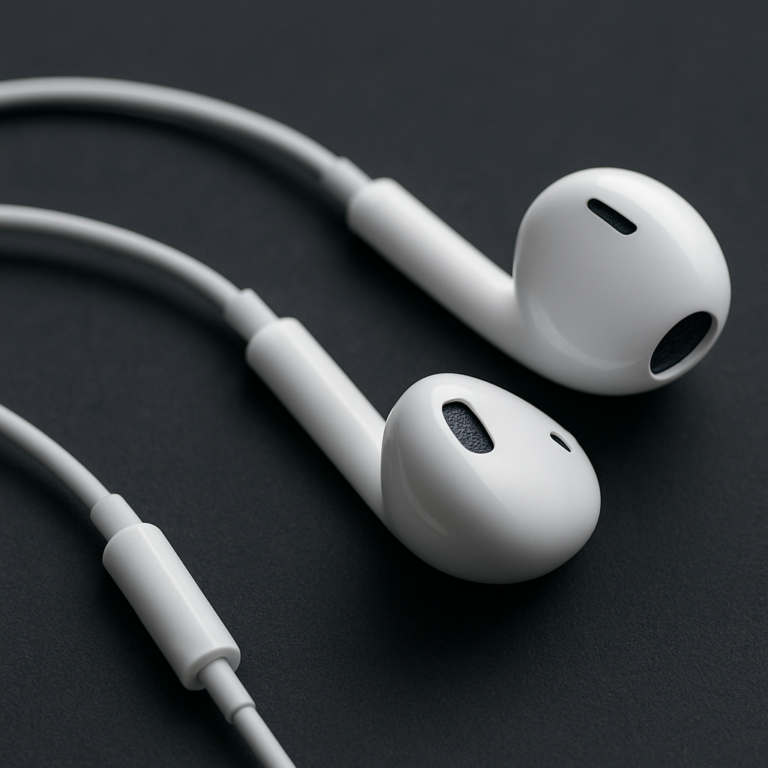
The 1979 release of the Sony Walkman turned headphones into a fashion statement and a lifestyle necessity. Suddenly, you could take your music anywhere. Fast forward to 201, and the Apple iPod (with its white earbuds) made headphones a global cultural icon.
👨 🔬 Nathaniel Baldwin: The Eccentric Inventor Behind the First Personal Audio
Let’s zoom in on the man himself. Nathaniel Baldwin was not your typical inventor. He had no formal engineering degree, yet he revolutionized audio technology.
The Kitchen Workshop
Baldwin’s “lab” was his kitchen table. He crafted the first units by hand, using metal cups for the earpieces and balanced armature drivers that offered incredible clarity for the time. Unlike the heavy, single-ear devices of the past, Baldwin’s design was lightweight (relatively speaking) and rested on the head, freeing up the user’s hands.
The Navy Connection
In 1915, the U.S. Navy tested Baldwin’s headphones. The results were staggering. The clarity of the audio allowed operators to hear faint radio signals that were previously lost in the noise. The Navy ordered 10 pairs.
Here is the twist: Baldwin refused to mass-produce them. He insisted on hand-crafting every unit to maintain quality. When the Navy realized they needed hundreds, not ten, they moved production to a factory, but Baldwin’s refusal to compromise on his “hand-made” standard led to a breakdown in the relationship. He eventually lost the patent rights, and his invention was mass-produced by others without his direct involvement.
Why He Matters
Baldwin’s legacy is the binaural form factor. Every pair of over-ear and on-ear headphones you see today owes a debt to his kitchen-table prototype. He proved that personal, private listening was possible and desirable.
📜 The Evolution of Headphone Technology: 7 Key Milestones That Changed Sound Forever
To truly appreciate where we are, we need to look at the seven pivotal moments that shaped the industry.
-
1891: The First In-Ear Patent
Inventor: Ernest Mercadier (France).
Inovation: Patented a miniature receiver with rubber tips, the ancestor of modern in-ear monitors (IEMs).
Impact: Proved that sound could be isolated within the ear canal. -
1890s: The Electrophone System
Inovation: First dual-ear system for live entertainment.
Impact: Introduced the concept of stereo-like separation (though technically mono sources), but required manual holding. -
1910: The Baldwin Headset
Inventor: Nathaniel Baldwin.
Inovation: First practical, head-mounted, binaural headset with balanced armature drivers.
Impact: Established the standard form factor for the next century. -
1937: The Beyerdynamic DT 48
Brand: Beyerdynamic.
Inovation: First dynamic driver headphones designed for professional use.
Impact: Set the standard for studio monitoring and durability. -
1958: The Koss SP/3
Inventor: John C. Koss.
Inovation: First commercially available stereo headphones.
Impact: Shifted headphones from utility to music enjoyment. -
1979: The Sony Walkman
Brand: Sony.
Inovation: Portable cassette player with lightweight headphones.
Impact: Made portable music a global phenomenon. -
190s/20s: Active Noise Cancellation (ANC)
Brand: Bose (popularized by the QuietComfort series).
Inovation: Electronics that cancel out ambient noise.
Impact: Allowed for clear listening in noisy environments like planes and trains.
🛠️ How Early Headphones Worked: The Science Behind the Sound
You might wonder, how did a 1910 headset produce sound without modern electronics? The secret lies in the transducer technology.
Moving Iron vs. Balanced Armature
Baldwin’s original design utilized balanced armature drivers. Here’s how they work:
- Magnetic Field: A permanent magnet creates a static magnetic field.
- Armature: A tiny, balanced piece of metal (the armature) is suspended in this field.
- Coil: An electrical signal (audio) passes through a coil attached to the armature.
- Movement: The varying current causes the armature to vibrate.
- Diaphragm: The armature is connected to a diaphragm, which pushes air to create sound waves.
Why was this revolutionary?
- Efficiency: Balanced armatures are highly efficient, requiring less power to drive.
- Clarity: They offer excellent detail in the mid and high frequencies.
- Size: They are small enough to fit in earpieces, paving the way for in-ear monitors.
The Limitations of Early Tech
Despite their ingenuity, early headphones had significant drawbacks:
- No Damping: Early models lacked acoustic damping, leading to resonance peaks that distorted the sound.
- Impedance Mismatch: They were designed for high-impedance telegraph lines (75 ohms to 2,0 ohms), making them incompatible with modern low-impedance devices (16-32 ohms) without an adapter.
- Comfort: No foam, no leather, just metal and hard plastic. Long listening sessions were a pain (literally).
🌍 From Navy Communication to Music Lovers: The Commercialization of Headphones
For decades, headphones remained a niche tool. They were essential for:
- Aviation: Pilots needed to hear radio coms over engine noise.
- Broadcasting: Radio announcers needed to monitor their own voices.
- Audiology: Hearing tests required isolated sound.
But the shift to consumer use began in the 1950s. As radio and television became household staples, people wanted to listen without disturbing others. The Koss SP/3 was the catalyst. It wasn’t just a tool; it was a product.
The Rise of the Stereo Market
By the 1960s, companies like Sennheiser and AKG began producing high-fidelity headphones for audiophiles. The Sennheiser HD 414 (1968) was the first open-back, lightweight headphone, making music listening a comfortable, immersive experience.
The Cultural Shift
In the 1980s and 90s, headphones became a fashion accessory. Brands like Beats by Dre (launched in 208) took this to the next level, associating headphones with hip-hop culture and celebrity endorsements. Today, headphones are as much a statement of style as they are a tool for listening.
🎵 The Rise of the Stereo Headphone and the Birth of Personal Listening
The transition from mono to stereo was the single biggest leap in headphone history. Before 1958, headphones reproduced a single channel of audio. If you were listening to a symphony, you heard everything from one “speaker” in your ear.
John C. Koss changed this by creating the Koss SP/3, which separated the audio into left and right channels.
- The Effect: Suddenly, you could hear the violin on the left and the cello on the right. The soundstage expanded.
- The Impact: This created the illusion of being in the concert hall. It turned headphones from a utility into a premium audio experience.
This innovation paved the way for the stereo boom of the 1960s and 70s, where every home stereo system needed a pair of headphones for private listening.
🔊 Modern Headphone Innovations: Wireless, Noise-Canceling, and Beyond
Fast forward today, and the technology is unrecognizable from Baldwin’s kitchen creation.
Active Noise Cancellation (ANC)
Bose and Sony have perfected ANC, using microphones to detect ambient noise and generate an “anti-noise” signal to cancel it out. This allows you to listen at lower volumes, protecting your hearing.
Wireless Freedom
The removal of the cable was a game-changer. Bluetooth technology, standardized in the early 20s, allowed for true wireless listening. The Sony WH-10XM5 and Apple AirPods Max are testaments to how far wireless audio quality has come.
Spatial Audio and 3D Sound
Modern headphones now use head-tracking and spatial audio algorithms to simulate a 3D soundstage, making movies and games feel incredibly immersive.
Material Science
Gone are the metal cups. Modern headphones use memory foam, protein leather, and lightweight alloys to ensure comfort for hours of listening.
🤔 Common Myths and Misconceptions About the Invention of Headphones
Let’s bust some myths that have circulated for decades.
Myth 1: “Steve Jobs invented the AirPods.”
Reality: While Apple popularized the true wireless form factor with the AirPods in 2016, the concept of wireless earbuds existed long before. The first in-ear headphones were patented by Ernest Mercadier in 1891.
Myth 2: “Headphones were always for music.”
Reality: For the first 50 years of their existence, headphones were strictly for communication (telegraphy, radio, aviation). Music was a secondary, accidental use case.
Myth 3: “Nathaniel Baldwin made a fortune.”
Reality: Baldwin failed to capitalize on his invention. He refused to mass-produce, lost his patent rights, and died in relative obscurity. His legacy is his invention, not his bank account.
Myth 4: “All early headphones were uncomfortable.”
Reality: While early models were heavy, Baldwin’s design was actually considered revolutionary for its time because it distributed weight better than the single-ear clamps. It was the first to be truly “head-mounted.”
📊 Comparison: Vintage vs. Modern Headphone Designs and Sound Quality
Let’s put the past and present side-by-side. How do they stack up?
| Feature | Vintage (1910s – 1950s) | Modern (2020s) |
|---|---|---|
| Primary Use | Telecommunications, Military | Music, Gaming, Calls, Entertainment |
| Driver Type | Balanced Armature / Moving Iron | Dynamic, Planar Magnetic, Electrostatic, Balanced Armature |
| Sound Stage | Mono (Single Channel) | Stereo, Spatial Audio, 3D Sound |
| Connectivity | Wired (High Impedance) | Wireless (Bluetooth), Wired (Low Impedance) |
| Noise Isolation | Passive (Poor) | Active (ANC) + Passive (High) |
| Comfort | Metal cups, no padding | Memory foam, protein leather, ergonomic |
| Durability | Extremely high (Metal) | Variable (Plastic/Metal mix) |
| Price | N/A (Custom made) | $50 – $1,0+ |
The Verdict:
- Vintage: Incredible historical significance, robust build, but limited sound quality and comfort.
- Modern: Unmatched convenience, sound quality, and features, but often less durable due to plastic components.
💡 Quick Tips and Facts: Essential Headphone Trivia You Need to Know
Before we wrap up the history lesson, here are some bonus facts to impress your friends:
- The 3.5mm Jack: The standard 3.5mm audio jack was popularized by the Sony EFM-17J radio in 1964. Before that, 6.35mm (1/4 inch) was the norm.
- Hearing Safety: Listening at 85 dB for more than 8 hours a day can cause permanent hearing loss. Modern headphones often include volume limiters to prevent this.
- The First “True Wireless”: While AirPods made it famous, the first true wireless earbuds were released by Panasonic in 2014, but they were clunky and expensive.
- Bone Conduction: Some modern headphones (like Shokz) don’t even go in your ear. They use bone conduction to transmit sound through your cheekbones, leaving your ear canal open.
🏆 Conclusion: The Legacy of the First Headphones
So, who invented the first headphones? The answer is a collaboration of history. Ernest Mercadier gave us the in-ear concept, Electrophone gave us the dual-ear idea, but Nathaniel Baldwin gave us the modern form factor.
Baldwin’s kitchen-table invention in 1910 was the spark that ignited a century of innovation. From the U.S. Navy to the Koss SP/3, from the Sony Walkman to the AirPods, every pair of headphones you own is a descendant of that first binaural headset.
Why does this matter?
Because understanding the history of headphones reminds us that innovation often comes from unexpected places. It wasn’t a giant corporation; it was a man in a kitchen who just wanted to hear the sermon clearly.
Final Thought:
Next time you put on your noise-canceling headphones to block out the world and lose yourself in a song, take a moment to thank Nathaniel Baldwin. Without his eccentric genius, we might still be holding heavy metal cups to our ears, struggling to hear a single channel of mono sound.
The journey from the telegraph to the spatial audio of today is a testament to human ingenuity. And the best part? We are just getting started. What will the next chapter of headphone history look like? Brain-computer interfaces? Holographic sound? Only time will tell.
🔗 Recommended Links: Where to Learn More About Audio History
If you’re hungry for more audio history or looking to upgrade your gear, check out these resources:
🛒 Shop Top Brands & Products
- 👉 Shop Koss Headphones: Amazon | Koss Official
- 👉 Shop Sony Headphones: Amazon | Sony Official
- 👉 Shop Bose Headphones: Amazon | Bose Official
- 👉 Shop Sennheiser Headphones: Amazon | Sennheiser Official
📚 Books & Further Reading
- “The History of the Headphone” (Available on Amazon) – A deep dive into the evolution of personal audio.
- “Audio Engineering 101” – For those interested in the technical side of sound.
🎧 Explore Headphone Brands™ Categories
❓ FAQ: Frequently Asked Questions About the First Headphones
Who invented headphones in 1910?
Nathaniel Baldwin is credited with inventing the first practical, binaural headphones in 1910. He crafted them in his kitchen in Utah, USA, using balanced armature drivers. His design was the first to be successfully adopted by the U.S. Navy for communication purposes.
Read more about “🎧 The Untold Story of 1910 Headphones: Origins, Tech & Legacy (2025)”
Who were the first people to use headphones?
The first users were telegraph operators and telephone switchboard operators in the late 19th century. However, these were often single-ear devices. The first people to use dual-ear headphones (as we know them) were U.S. Navy personnel in 1915, followed by radio operators and early audiophiles.
Read more about “🎧 Which Company Has Better Headphones? The 2026 Showdown”
What did Nathaniel Baldwin invent?
Nathaniel Baldwin invented the first binaural headset that rested on the head, featuring balanced armature drivers and metal ear cups. His invention solved the problem of hearing faint radio signals clearly and established the form factor for all modern headphones.
Who was the original inventor of headphones?
The title of “original inventor” is debated. Ernest Mercadier patented an in-ear device in 1891, and the Electrophone company created a dual-ear system in the 1890s. However, Nathaniel Baldwin is widely recognized as the inventor of the first commercially viable, head-mounted, binaural headphones in 1910.
Read more about “Your First Headphones: 10 Must-Know Tips & Top Picks for 2026 🎧”
Who is credited with inventing the first modern headphones?
Nathaniel Baldwin is credited with the first modern form factor (1910), while John C. Koss is credited with inventing the first stereo headphones (1958), which transformed headphones from a communication tool into a music-listening device.
Read more about “When Were the First Headphones Made? 🎧 Discover 7 Surprising Facts (2025)”
What was the first brand of headphones ever made?
There wasn’t a single “brand” in the modern sense for the very first devices. Holtzer-Cabot was one of the earliest manufacturers (1909) of wireless operator receivers. Baldwin produced his own units by hand, but the first major commercial brand to popularize stereo headphones was Koss (Koss Corporation).
Read more about “🐉 10 Emerging Chi-Fi Brands Crushing It for Budget Audiophiles (2026)”
When did headphones become popular for consumer use?
Headphones became popular for consumer use in the late 1950s with the introduction of the Koss SP/3 stereo headphones. Their popularity exploded in the 1979 with the release of the Sony Walkman, which made portable music listening a global phenomenon.
Read more about “🎧 Top 12 Gaming Headset Brands for Esports Dominance (2026)”
How have headphone designs evolved since their invention?
Headphone designs have evolved from heavy, metal, single-ear clamps to lightweight, ergonomic, binaural headsets. Key evolutions include the shift from mono to stereo, the addition of noise cancellation, the transition from wired to wireless, and the development of in-ear and bone conduction technologies.
📚 Reference Links: Sources and Further Reading
- Wikipedia: Headphones – Comprehensive history and technical specs
- Headphone Shop: Nathaniel Baldwin – The Birth of Personal Audio
- LSTN Sound: A Brief History of Headphones – Key Facts & Inventions
- Bose: The Science of Noise Cancellation – How ANC Works
- Sony: The Walkman Legacy – History of the Walkman
- Koss Corporation: Our History – The Story of John C. Koss