Support our educational content for free when you purchase through links on our site. Learn more
Why Are Sony WH-100XM3 So Good? 🎧


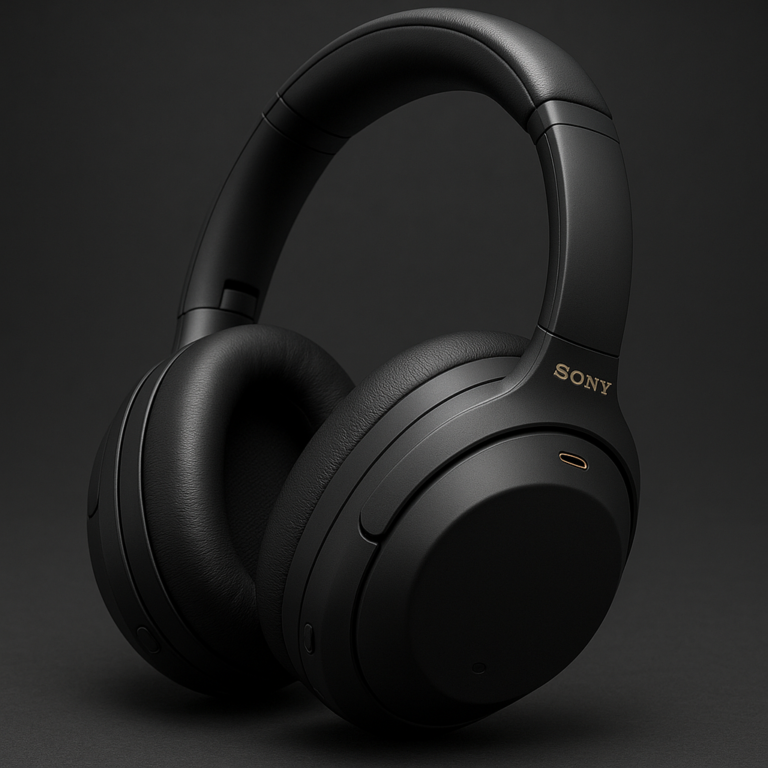
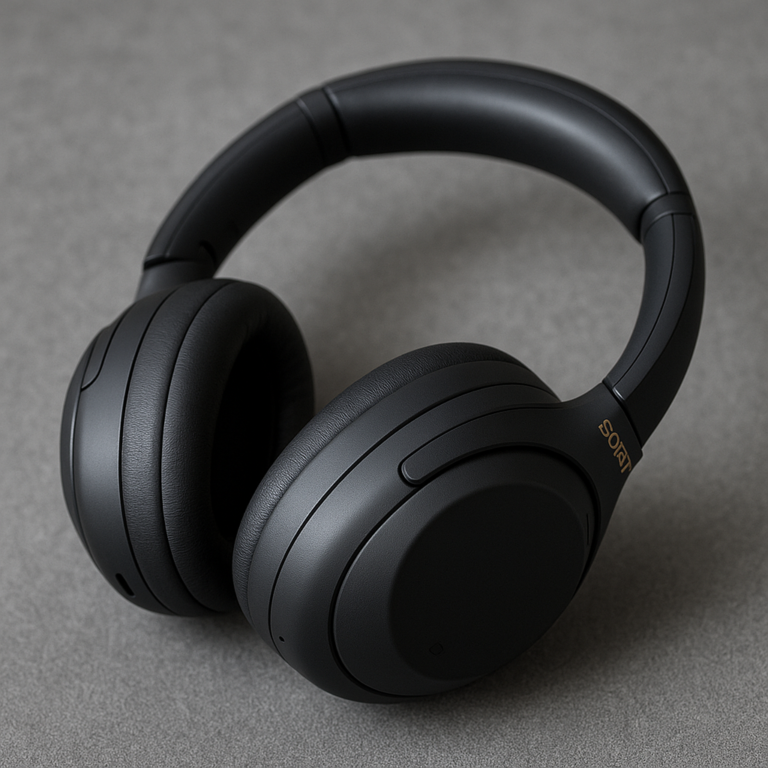
Why are Sony WH-100XM3 so good? They combine excellent active noise cancelling, a comfortable lightweight fit, long battery life, and customizable sound in a travel-friendly pair of headphones. They’re an especially smart choice if you want to quiet engine hum and office noise without giving up convenient everyday features.
On a flight, the XM3’s strength isn’t making the cabin vanish like a magic trick; it’s turning that steady roar into a much less tiring background. Sony rates the battery for up to 30 hours with noise cancelling on, while independent testing has found lower results under specific conditions—so expect performance to vary with volume, settings, and battery age.
They’re not flawless: the microphone is merely adequate, the default bass may be heavy for some listeners, and there’s no Bluetooth multipoint. But if comfort and noise cancelling are your priorities, the XM3’s winning combination still makes sense—provided the pair you’re considering is in good condition.
Key Takeaways
- Excellent noise cancelling: Especially effective against steady sounds like airplane engines, fans, and HVAC.
- Comfortable for travel: Lightweight construction and cushioned earcups suit long listening sessions, though ears can get warm.
- Flexible sound: The Sony app’s EQ lets you tame the bass or tailor the sound to your taste.
- Useful battery life: Sony claims up to 30 hours with ANC enabled; actual results depend on settings, usage, and battery health.
- Know the trade-offs: No multipoint Bluetooth, and call quality isn’t a standout.
- Still worth considering: A well-kept XM3 can be a strong pick if ANC and comfort matter more than newer features.
👉 Shop Sony headphones:
- Sony WH-100XM3 on Amazon | Sony WH-100XM3 on eBay | Sony product information
- Sony WH-100XM4 on Amazon | Sony WH-100XM4 official page
- Sony WH-100XM5 on Amazon | Sony WH-100XM5 official page
Table of Contents
- ⚡️ Quick Tips and Facts
- 📜 Sony WH-100XM3 Background: How They Became Noise-Cancelling Favorites
- 🔍 Sony WH-100XM3 Review: What Makes These Headphones So Good?
- 📦 Design, Build Quality, and Portability
- 😌 Comfort and Fit for Long Listening Sessions
- 🎛️ Features, Controls, and Sony Headphones Connect App
- 🗣️ Voice Control, Touch Gestures, and Quick Attention Mode
- 🔇 Noise Cancelling: How Effective Is Sony’s ANC?
- 🎵 Sound Quality: Bass, Vocals, and Detail
- 🎚️ EQ and Sound Personalization
- 📡 Bluetooth Codecs, Wired Listening, and Connectivity
- 🔋 Battery Life, Charging, and Everyday Reliability
- 📞 Call Quality and Microphone Performance
- ✈️ Travel, Work, and Everyday Use
- ✅ Sony WH-100XM3 Pros and Cons
- ⚖️ Sony WH-100XM3 vs. WH-100XM2, WH-100XM4, and Newer Models
- 🛠️ Common Problems, Troubleshooting, and Care Tips
- 🛒 Are the Sony WH-100XM3 Still Worth Buying?
- 🏁 Conclusion
- 🔗 Recommended Links
- ❓ FAQ
- Why are the Sony WH-100XM3 so good?
- Are the Sony WH-100XM3 good for noise cancelling?
- Do the Sony WH-100XM3 support multipoint Bluetooth?
- Can you use the Sony WH-100XM3 with a cable?
- How long does the Sony WH-100XM3 battery last?
- Are the Sony WH-100XM3 comfortable for glasses wearers?
- Are the Sony WH-100XM3 still worth buying?
- 📚 Reference Links
⚡️ Quick Tips and Facts
First, a useful detail: the official model name is Sony WH-100XM3 (with hyphens), though plenty of people search for “Sony WH 100XM3.” For broader recommendations, see our guide to Sony headphones and browse our Bluetooth headphones picks.
| Category | Rating (1–10) | Our take |
|---|---|---|
| Active noise cancelling | 9.5 | Excellent at reducing steady engine noise and much everyday background sound |
| Sound quality | 8.5 | Full, clear, customizable sound; default bass may be too strong for some |
| Comfort | 9.0 | Light, well-padded, and especially good for travel |
| Battery life | 9.0 | Sony rated the battery for up to 30 hours; real-world results vary by settings and volume |
| Features and app | 8.5 | Useful controls, EQ, adaptive options, and Quick Attention |
| Call quality | 6.5 | Fine for casual calls, but not a standout headset microphone |
| Durability and repairability | 7.0 | Practical folding design, but age and wear matter when buying used |
| Overall | 8.5 | Still compelling for noise cancelling and travel if the condition is good |
| Quick fact | What to know |
|---|---|
| Type | Over-ear wireless noise-cancelling headphones |
| Noise cancelling | Adjustable active noise cancellation (ANC), with ambient-sound modes |
| Battery | Sony specifies up to 30 hours of playback with noise cancelling on |
| Charging | USB-C; Sony says a 10-minute charge can provide up to five hours of playback under specified conditions |
| Wireless codecs | SBC, AAC, aptX, aptX HD, and LDAC; availability depends on the connected device and settings |
| Wired listening | Included 3.5 mm cable |
| Multipoint | No simultaneous two-device Bluetooth connection |
| Best for | Flights, commutes, office hum, and listeners who want customizable sound |
| Main caveats | Older design, no Bluetooth multipoint, and merely average call performance |
Short version: The XM3s are good because Sony balanced several difficult jobs in one headphone: strong ANC, comfortable long-wear fit, flexible sound, useful controls, and travel-ready battery life. They’re not perfect, and some advantages depend on your phone and listening habits. We’ll explain which ones actually matter—and which “premium” features are mostly spec-sheet confetti. 🔊
Specifications and battery claims are based on Sony’s product information; actual playback time depends on settings, volume, codec, and battery condition. Sony WH-100XM3 specifications
📜 Sony WH-100XM3 Background: How They Became Noise-Cancelling Favorites

Sony launched the WH-100XM3 as a premium successor to the WH-100XM2. The headline change was not simply “more noise cancelling.” Sony redesigned the processing around its HD Noise Cancelling Processor QN1, a chip handling noise reduction and contributing to the headphone’s audio processing and amplification system. The result was a particularly convincing combination of quiet, comfort, and everyday usability. Sony’s WH-100XM3 product page
Reviewers noticed that all-round approach. What Hi-Fi? called the XM3 a “superb all-round package,” praising its natural sound, strong noise cancelling, and comfort. SoundGuys likewise highlighted its ability to reduce outside noise and its travel-friendly battery life.
That doesn’t mean every review describes the same experience. Sound, comfort, and battery tests depend on fit, source device, volume, and test method. SoundGuys’ reported 24-hour playback test, for example, used a specified listening level and ANC setting; Sony’s “up to 30 hours” is a manufacturer claim under its test conditions. Those figures can both be true without one reviewer getting the math wrong.
The XM3 has since been succeeded by newer models, including the Sony WH-100XM4 and WH-100XM5. But newer doesn’t automatically mean better value for every listener. The question is whether the older model’s strengths still fit your needs.
🔍 Sony WH-100XM3 Review: What Makes These Headphones So Good?
The XM3’s reputation comes from how well its main parts work together. It doesn’t rely one trick. You get effective noise reduction, a comfortable fit, a companion app with meaningful adjustments, and a sound profile that can be tailored instead of treated as fixed.
📦 Design, Build Quality, and Portability
The XM3 is a folding over-ear headphone designed for bags, planes, and commutes. It feels light on the head, with a soft-touch finish and padded earcups. Compared with the XM2, What Hi-Fi? noted a lighter build and a headband that sits closer to the head, while also observing that the plastic construction looks less premium than the older model’s metal details.
That trade-off is familiar in portable headphones: less weight can improve comfort, but a lighter plastic design may feel less luxurious in your hands. We’d judge the XM3 by how it wears and travels, not by whether it looks like it belongs in a jewelry case.
| Design detail | Everyday benefit | Possible drawback |
|---|---|---|
| Folding earcups | Packs more neatly for travel | Hinges and moving parts deserve gentle handling |
| Over-ear cushions | Helps create a seal for comfort and ANC | Ears can get warm during long sessions |
| Soft-touch surfaces | Comfortable, understated feel | Can show wear with age and frequent handling |
| Lightweight build | Reduces pressure during extended listening | Doesn’t feel as metal-heavy as some premium rivals |
| Suplied carry case | Adds protection in a bag | Still worth avoiding heavy compression |
For maintenance, keep the headphones dry, avoid pulling them by the cable, and store them in the case. Our headphone accessories section covers practical travel and care add-ons.
😌 Comfort and Fit for Long Listening Sessions
Comfort is one of the XM3’s strongest points. The headband and cushions distribute pressure well for many listeners, while the earcups provide enough depth to avoid the cramped feel some closed-back headphones create. What Hi-Fi? praised the lighter construction and softer, wider cushioning; SoundGuys also described the headphones as light and comfortable.
Still, fit is personal. Glasses can break the earcup seal slightly or create pressure at the temples. A tighter glasses frame may also let in more sound where the cushion meets the arm. And in a warm room, closed-back earcups can feel like a small climate-controlled sauna—minus the relaxation soundtrack. 🥵
Our fit check:
- Set the headband so the cups sit evenly over both ears.
- Move hair, glasses arms, or hood fabric away from the cushion seal where possible.
- Play a familiar track at low volume and check for uneven bass or outside leakage.
- If one side sounds thinner, adjust the cup position before changing the EQ.
- Take short breaks during long sessions, especially in warm conditions.
A six-month owner review described the XM3 as comfortable for extended wear and reported no visible wear during that period, while noting warmth during long sessions and some glasses pressure. That’s useful firsthand context, but it isn’t a durability guarantee: age, climate, storage, and daily use vary. See the featured video for that owner’s full perspective.
🎛️ Features, Controls, and Sony Headphones Connect App
The Sony Headphones Connect app is a big reason the XM3 feels more adaptable than a basic wireless headphone. Depending on device and app version, it lets you adjust noise-cancelling and ambient-sound behavior, customize sound, and manage other listening settings.
The app is valuable because headphones are worn in different places. You might want stronger isolation on a flight, more awareness while crossing a street, and a gentler sound profile at your desk. Instead of one permanent setting, the XM3 offers controls to make those situations less of a compromise.
| Feature | What it does | When it’s useful |
|---|---|---|
| Equalizer | Adjusts tonal balance | Reducing excess bass or shaping vocals |
| Ambient sound control | Lets more outside sound through | Walking, waiting for announcements, or chatting |
| Adaptive Sound Control | Can adjust listening behavior based on activity settings | People who want automatic scene changes |
| Noise-cancelling optimization | Helps tune noise reduction to conditions | Travel and changes in wearing environment |
| Customizable controls | Offers options for control behavior | Matching settings to your habits |
A practical app setup takes only a few minutes:
- Install Sony’s app and pair the headphones.
- Start with the default sound profile so you have a baseline.
- Set the ANC or ambient-sound mode for your most common environment.
- Make small EQ changes, then listen to familiar music again.
- Save the setup and test it outside your quiet room—real-world noise changes what you notice.
🗣️ Voice Control, Touch Gestures, and Quick Attention Mode
The right earcup’s touch surface handles common commands such as playback, calls, volume, and track changes. The memorable gesture is Quick Attention: place your palm over the right earcup and the headphones lower the music while allowing more outside sound through. It’s handy when someone asks a question or an airport announcement interrupts your playlist.
There is a learning curve. A light brush can register differently from a deliberate tap, and touch controls can feel awkward with gloves or in bad weather. We recommend practising the gestures at home before trying to skip tracks while balancing a coffee and a boarding pass.
The XM3 also supports voice-assistant access, depending on your connected device and configuration. Voice control is convenient for quick requests, but it depends on the phone, assistant, network connection, and the microphone’s environment. For detailed control setup, Sony provides support information through its headphones help pages.
🔇 Noise Cancelling: How Effective Is Sony’s ANC?
This is the XM3’s headliner. Active noise cancelling uses microphones to monitor outside sound and processing to generate a signal that reduces parts of that noise. It is particularly effective against steady, low-frequency sounds such as aircraft engines, HVAC, and road rumble. The headphones can also make busy environments feel less fatiguing, even when they don’t erase every voice or sharp sound.
Both What Hi-Fi? and SoundGuys praised the XM3’s noise reduction. What Hi-Fi? highlighted improvements across frequencies, including office chatter and aircraft noise; SoundGuys described it as excellent at reducing outside sound, especially consistent engine and HVAC noise. The descriptions differ in emphasis, not necessarily in result: a steady engine is easier for ANC to reduce than a sudden shout or clattering dish.
| Sound around you | What to expect |
|---|---|
| Aircraft or bus rumble | Strong reduction; one of the XM3’s best use cases |
| Air-conditioning or fan hum | Strong reduction when the earcups seal well |
| Office chatter | Reduced, not erased; voices can remain audible |
| Suden bangs or sharp sounds | Often still noticeable |
| A person speaking directly to you | Use Quick Attention or ambient mode; ANC is not a substitute for awareness |
| Wind | Can be challenging for microphone-based ANC |
Sony also included an Atmospheric Pressure Optimizer intended to adjust noise-cancelling performance for high-altitude listening. This is a travel-focused feature, not a promise that every cabin becomes silent. For details about its purpose and setup, check Sony’s WH-100XM3 support material.
A useful safety reminder: ANC can reduce environmental awareness. Use ambient sound or remove the headphones near traffic, public announcements, and situations where you need to hear what is happening around you.
🎵 Sound Quality: Bass, Vocals, and Detail
The XM3 has a full, engaging sound with a noticeable bass lift in its default tuning. That can make electronic music, pop, and film soundtracks feel satisfyingly weighty. Vocals and instrumental detail remain clear enough to keep the sound from becoming pure bass pudding—but listeners who prefer a neutral presentation may want to adjust the EQ.
What Hi-Fi? praised the headphones’ open presentation, focused vocals, crisp treble, and subtle dynamics, while noting that their clarity can reveal flaws in poorer recordings. SoundGuys found that the XM3’s tuning was close to its preferred target for general listeners, while also pointing out the boosted bass and the app’s ability to reduce it. These are not contradictory verdicts: one describes listening character, the other compares measured response with a target and evaluates tuning preferences.
| Listening preference | XM3 experience | Suggested starting point |
|---|---|---|
| Bass-forward pop or hip-hop | Full and energetic | Try the default EQ first |
| Vocals and acoustic music | Clear and present | Reduce bass slightly if vocals feel crowded |
| Classical or detailed mixes | Good detail; recording quality is exposed | Use a familiar, well-mastered track |
| Neutral monitoring | Not a studio reference headphone | Consider dedicated audiophile headphones |
| Late-night or low-volume listening | Full sound can help music retain weight | Avoid raising volume just to hear detail |
At Headphone Brands™, we often start reviews with a few recordings we know well: one vocal track, one bass-heavy track, and one busy mix. The point isn’t to crown a “correct” sound in five minutes; it’s to spot whether a headphone consistently makes voices too thick, cymbals too sharp, or bass too bomy.
🎚️ EQ and Sound Personalization
The app’s EQ helps the XM3 serve more than one kind of listener. If the bass feels excessive, reducing the bass control a little is often more effective than boosting every other band. SoundGuys suggests Clear Bass −1 as a modest starting point for listeners seeking less low-end emphasis. Treat it as a test setting, not a universal prescription: headphone seal, music, and taste all affect what sounds balanced.
Try this step by step:
- Pick a song you know well, ideally with clear vocals and bass.
- Listen at a comfortable volume using the default settings.
- Reduce Clear Bass by one step if low notes overpower voices or kick drums feel too thick.
- Change only one EQ control at a time.
- Switch back to the original setting after a few minutes. If the adjusted version consistently sounds clearer to you, keep it.
Small adjustments are easier to evaluate than dramatic ones. Big EQ boosts can make the sound less natural, reduce headroom, or make certain tracks tiring. If you’d rather skip tuning, the default profile is still enjoyable for many everyday listeners.
📡 Bluetooth Codecs, Wired Listening, and Connectivity
The WH-100XM3 supports SBC, AAC, aptX, aptX HD, and LDAC, according to SoundGuys’ review. Which codecs you can actually use depends on the source device, operating system, connection settings, and sometimes the app. A phone and headphones both need to support the same codec for it to be available.
LDAC can carry more audio data than standard Bluetooth codecs under supported settings, but it is not lossless Bluetooth transmission. Higher-bitrate modes can also be less reliable in environments with interference. SoundGuys recommends 660 kbps as a useful LDAC balance and notes that codec behavior and results vary. In real use, a stable connection and well-mastered recording often matter more than chasing the largest codec number. Sony’s LDAC overview explains the technology and compatible-device requirements.
The supplied 3.5 mm cable adds flexibility for wired sources or when the battery is depleted. SoundGuys reports that wired active listening can sound particularly good, while wired passive listening—with ANC off and the headphones powered down—can sound different. So, if you’re evaluating sound, compare like with like: same track, similar volume, and the same power and ANC state.
| Connection option | Benefit | Limitation |
|---|---|---|
| Bluetooth | Wireless convenience | Codec and connection depend on the source |
| Bluetooth with LDAC | High-bitrate option on compatible devices | Not lossless; may need more stable connection conditions |
| 3.5 mm cable, powered | Wired fallback with headphone processing available | Battery may still be needed for active features |
| 3.5 mm cable, unpowered | Useful when the battery is flat | Sound can differ from ANC-on or powered modes |
One notable omission for modern multitaskers: the XM3 does not support Bluetooth multipoint for two simultaneous source devices. If you regularly switch between a laptop and phone, the newer XM4 adds multipoint support, which may be worth the upgrade.
🔋 Battery Life, Charging, and Everyday Reliability
Sony rates the WH-100XM3 for up to 30 hours of playback with noise cancelling enabled, and advertises up to five hours of playback after a 10-minute charge under specified conditions. The full-charge time is listed as about three hours. Sony’s specifications provide the official figures; SoundGuys’ test found about 24 hours at 75 dB SPL with ANC on.
Why the gap? Manufacturer and reviewer tests may use different volume levels, settings, codecs, and test methods. Battery age adds another variable: a secondhand XM3 may no longer perform like a new one.
| Claim or test | Figure | How to interpret it |
|---|---|---|
| Sony rated playback | Up to 30 hours with ANC on | Manufacturer figure under stated test conditions |
| SoundGuys playback test | 24 hours at 75 dB SPL with ANC on | A reviewer result from a defined test setup |
| Sony quick-charge claim | Up to 5 hours after 10 minutes | Actual result varies with conditions |
| Sony full charging time | About 3 hours | Manufacturer specification |
For a used pair, test the battery before relying on it for a long flight. Charge fully, play music at a normal level with ANC on, and check whether the percentage drops unusually fast. Also inspect the USB-C port and charging cable. A tired battery doesn’t invalidate the XM3’s design—but it changes the value of the pair in front of you.
📞 Call Quality and Microphone Performance
The XM3’s microphone is usable for casual calls, but it is not the reason to buy these headphones. SoundGuys found that voices generally came through reasonably well, while noting that background noise could be picked up and voices could sound bassier because of proximity effects. A six-month owner in the featured video also described the call microphone as quiet.
That helps explain why reviews can sound different: call results depend on microphone placement, background noise, phone processing, and the listener’s expectations. “Fine for checking in from the airport” and “ideal for daily professional calls” are not the same standard.
Our recommendation: If calls are a major part of your workday, compare newer headphones or a dedicated headset before choosing the XM3. If calls are occasional, the XM3’s other strengths may matter more.
✈️ Travel, Work, and Everyday Use
The XM3 makes the most sense in places where ANC and comfort solve a real problem. On a flight, noise reduction can make engine rumble less intrusive. In an office, it can make background hum less distracting. On a commute, it can make listening easier at a lower volume—though you should switch to ambient mode when situational awareness matters.
The six-month owner in the first YouTube video praised the noise cancelling on airplanes, long-session comfort, battery life, and app customization. They also mentioned warm ears, slight glasses pressure, and a microphone they found too quiet. That’s a refreshingly useful set of trade-offs: the headphones can be a travel champion and still have an everyday annoyance or two.
| Situation | How the XM3 fits | What to watch for |
|---|---|---|
| Long-haul flight | Excellent ANC and strong battery performance | Test fit and charging before departure |
| Open-plan office | Helps reduce steady noise and some chatter | Voices may still break through |
| Phone calls | Adequate for casual use | Not the strongest choice for noisy work calls |
| Walking outdoors | Ambient mode can help | Avoid full isolation near traffic |
| All-day listening | Light, cushioned fit | Heat and glasses pressure vary by person |
✅ Sony WH-100XM3 Pros and Cons
| ✅ Pros | ❌ Cons |
|---|---|
| Excellent reduction of steady, low-frequency noise | No Bluetooth multipoint |
| Comfortable, lightweight fit for many listeners | Microphone performance is only adequate |
| Full, engaging sound with app EQ | Default bass may be too strong for neutral-sound fans |
| USB-C charging and useful quick-charge support | Older model; used stock may have battery wear |
| Wired listening option with included cable | Plastic build may feel less premium than metal rivals |
| Useful Quick Attention and ambient-sound modes | Touch controls take practice |
| Broad codec support, including LDAC on compatible devices | Codec benefits depend on phone and connection conditions |
The balance: the XM3’s major benefits are things you notice every day—quiet, comfort, and a customizable sound. Its shortcomings matter most if you need multipoint, excellent call pickup, or a fresh battery with modern support.
⚖️ Sony WH-100XM3 vs. WH-100XM2, WH-100XM4, and Newer Models
The XM3 remains a strong option, but its successors add useful features. The WH-100XM4 introduced Bluetooth multipoint and other convenience features; the WH-100XM5 changed the physical design and brought a newer generation of noise cancelling. The older XM2 may still appeal to buyers who already own one, but the XM3 improved comfort and processing over its predecessor.
| Model | Why consider it? | Main trade-off |
|---|---|---|
| Sony WH-100XM2 | Similar family sound and ANC-focused design | Older hardware and comfort refinements |
| Sony WH-100XM3 | Strong ANC, comfort, app controls, wired option | No multipoint; older batteries may be worn |
| Sony WH-100XM4 | Adds multipoint and newer convenience features | Still an over-ear headphone with fit and heat considerations |
| Sony WH-100XM5 | Newer ANC and design | Different portability and folding approach |
Choose the XM3 if noise reduction, comfort, and flexible wired/wireless listening are your priorities, and the individual pair is in good condition. Choose a newer model if you need multipoint, improved call features, or a fresh warranty and battery. For shoppers comparing other styles, browse our earphones and budget headphones guides.
🛠️ Common Problems, Troubleshooting, and Care Tips
Older wireless headphones can develop problems that have nothing to do with their original sound quality. Before buying used—or declaring a pair broken—check the basics.
| Symptom | First checks |
|---|---|
| Bluetooth won’t connect | Forget the headphones on the source device, restart Bluetooth, and pair again using Sony’s instructions |
| No audio from one side | Check the cable and source balance settings; test a second device |
| Controls behave oddly | Clean the touch surface gently and verify the app’s control settings |
| ANC seems weak | Reseat the cups, check cushion condition, and compare with a quiet environment |
| Battery drains quickly | Test at moderate volume, confirm settings, and consider battery age |
| Headband or cushions show wear | Inspect closely; replacement-part availability may vary by region and seller |
| Charging is inconsistent | Test another USB-C cable and a known-good power source |
For pairing and operating guidance, use Sony’s official WH-100XM3 help page. If the headphones are secondhand, test both earcups, touch controls, ANC, the 3.5 mm jack, charging, and battery behavior before deciding they’re a bargain.
Care tips that help:
- Store the headphones in their case instead of loose in a bag.
- Wipe cushions with a soft, dry cloth; avoid soaking the padding.
- Don’t leave them in a hot car or damp gym bag.
- Treat the hinges and headband gently.
- Keep firmware and app instructions tied to Sony’s support guidance, rather than relying on random troubleshooting posts.
🛒 Are the Sony WH-100XM3 Still Worth Buying?
Yes—when the condition, battery health, and features match your needs. The XM3 still makes a persuasive case for travellers and commuters who want strong ANC, a comfortable over-ear fit, and customizable sound. What Hi-Fi? called it “close to perfect” for noise-cancelling headphones in its review context, while SoundGuys emphasized its travel practicality and noise reduction. Those reviews explain why the model earned its reputation; they don’t guarantee that every used pair is still in equally good shape.
The owners’ perspective is mixed in a helpful way. The six-month video review praised airplane ANC, comfort, and battery life, while mentioning warmth and a quiet mic. SoundGuys also included a user report describing Bluetooth pairing hassles and soft-part wear after roughly two years. That doesn’t establish a universal failure rate, but it does make condition checks essential when buying an older model.
Before choosing, ask yourself:
-
Do you mainly want noise cancelling and travel comfort? The XM3 is still a strong fit.
-
Do you switch between a laptop and phone all day? Consider the XM4 or a newer multipoint model.
-
Are calls your top priority? Compare microphone tests from newer headphones or dedicated headsets.
-
Is the battery’s history unknown? Test it before depending on it for a trip.
-
Do you prefer balanced, neutral sound? Try EQ adjustments—or compare with headphones designed for a more reference-style presentation.
-
Sony WH-100XM3: Amazon search | eBay search | Sony product information
-
Sony WH-100XM4: Amazon search | Walmart search | Sony Official
-
Sony WH-100XM5: Amazon search | Walmart search | Sony Official