Support our educational content for free when you purchase through links on our site. Learn more
What Is So Good About Marshall Headphones? 🎸


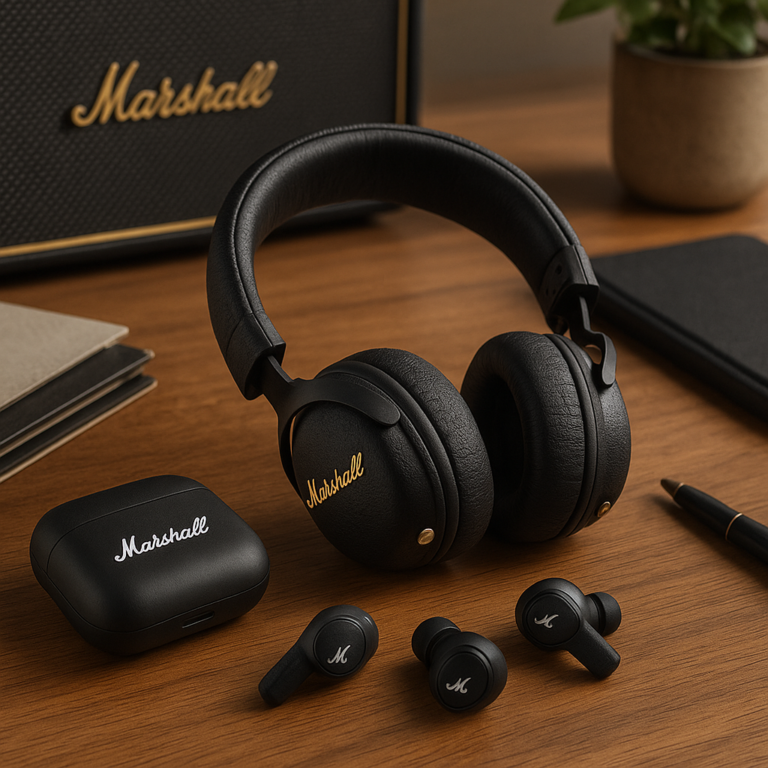
What is so good about Marshall headphones? They combine unmistakable amp-inspired style, lively sound, easy physical controls, and impressive battery claims on select models. The Marshall Major V is a standout if you want compact on-ear headphones and marathon listening; for active noise cancellation, the over-ear Monitor III A.N.C. is the better place to start.
That battery claim caught our attention in the studio: Marshall rates the Major V for up to 100 hours of wireless playback under specified conditions. But there’s a catch worth knowing before you buy: it has no active noise cancellation, and its on-ear fit can feel pressy during long sessions. The best Marshall headphones are the ones whose fit and features suit your actual day—not just your outfit.
Key Takeaways
- Marshall’s appeal is the combination: distinctive design, energetic sound, tactile controls, and long advertised battery life on select models.
- Choose the Major V for portability and battery endurance; choose the Monitor III A.N.C. if you want over-ear cups and ANC.
- Fit is personal: on-ear headphones can cause pressure, while open-fit earbuds may provide limited isolation or stability.
- Don’t assume every Marshall model has ANC or the same features. Check the exact model’s specifications before buying.
- 👉 Shop Marshall headphones: Marshall Official | Amazon
- Compare more wireless options: Bluetooth Headphones | Earphones
Table of Contents
- ⚡️ Quick Tips and Facts: What’s So Good About Marshall Headphones?
- 🎸 Marshall Headphones: The Story Behind the Rock ’n’ Roll Look
- 🎧 Why Marshall Headphones Stand Out
- Iconic design and comfortable everyday wear
- Signature sound: punchy bass, lively mids, and energetic treble
- Long battery life and handy wireless features
- Controls, Bluetooth, and app support
- Build quality, repairability, and sustainability
- 🎼 Which Marshall Headphones Are Worth Considering?
- 1. Marshall Major V: portable on-ear headphones with marathon battery life
- 2. Marshall Monitor III A.N.C.: over-ear comfort and noise cancellation
- 3. Marshall Major IV: a strong older-generation alternative
- 4. Marshall Monitor II A.N.C.: a previous-generation noise-cancelling pick
- 5. Marshall Minor IV: earbuds for a pocket-sized setup
- 📋 Marshall Headphones Compared: Specs, Fit, and Features
- 🪑 On-Ear vs. Over-Ear: Which Marshall Fit Is Right for You?
- ✅ What Marshall Headphones Do Especially Well
- ❌ What Could Better
- 🔇 Noise Cancellation, Isolation, and Listening on the Go
- 🎤 Calls, Podcasts, Gaming, and Everyday Use
- 📱 Marshall Bluetooth App, EQ, and Customization
- 🔌 Battery Life, Charging, and Wired Listening
- 🆚 Marshall Headphones vs. Beats, Sony, Bose, and Sennheiser
- 👂 What Owners and Reviewers Say About Marshall Headphones
- 🛒 Who Should Buy Marshall Headphones—and Who Should Skip Them?
- 💡 How to Choose the Right Marshall Headphones
- 🧼 Care, Troubleshooting, and Getting More From Your Headphones
- 🏁 Conclusion
- 🔗 Recommended Links
- ❓ FAQ
- 📚 Reference Links
⚡ Quick Tips and Facts: What’s So Good About Marshall Headphones?
Marshall headphones are appealing because they pair distinctive amplifier-inspired design with lively sound, practical controls, and—on select models—remarkable battery life. The best fit depends on whether you want compact on-ear headphones, noise-cancelling over-ears, or earbuds. For more model-by-model context, see our Marshall headphones guide.
| Quick fact | What it means for you |
|---|---|
| Signature retro styling | Textured finishes, Marshall script, and brass-like details give the headphones a recognizable rock-and-roll look. |
| Two very different headband options | The Marshall Major V is compact and on-ear; the Monitor III A.N.C. is over-ear and adds active noise cancellation. |
| Long advertised battery life | Marshall rates both models for up to 100 hours under specified conditions; using ANC on the Monitor III A.N.C. reduces its claimed runtime. |
| An engaging sound signature | Many listeners enjoy Marshall’s energetic presentation, but sound preference is personal—and EQ can help tailor it. |
| Not every model has ANC | The Major V does not have active noise cancellation. If blocking surrounding sound matters, look at the Monitor III A.N.C. or another ANC model. |
| Fit is part of sound | A poor seal on over-ear headphones, or too much pressure from on-ear cups, can affect comfort and perceived bass. |
Our quick take: Marshall is a strong choice if you care about style, portability, easy controls, and extended listening between charges. It is less compelling if your top priority is class-leading noise cancellation or a strictly neutral sound. If you’re comparing wireless options, browse our Bluetooth headphones guide too.
🎸 Marshall Headphones: The Story Behind the Rock ’n’ Roll Look
The Marshall name comes with serious stage presence. Jim Marshall founded the company behind the famous guitar amplifiers, and that visual language—black textures, bold lettering, brass-colored accents—carries over into the consumer headphones. Marshall’s headphone range is developed with Zound Industries, now part of the company formed through the Marshall Group.
That heritage explains the design, but it doesn’t automatically make a pair of headphones sound right for you. A guitar amp is built to shape and amplify an instrument; headphones must reproduce all kinds of music and spoken audio. So we judge the headphones as headphones: how they sound, fit, connect, and hold up in daily use.
Marshall style: more than a logo
The look is unusually consistent across the range. You’ll see textured surfaces, folding hinges on select models, and physical controls that stand out from the glossy touch-panel crowd. We like that the design feels intentional rather than like a generic headset wearing a band T-shirt.
There’s a practical side, too:
- Physical controls can be easier to use by feel than small touch targets.
- Foldable designs make some over-ear and on-ear models easier to pack.
- Recycled materials are used in some newer models. Check the individual product’s official specifications for the exact material claims, because percentages vary by model.
One small caveat: signature styling is a matter of taste. Some listeners love the amp-inspired look; others would rather have something understated. The sound and comfort still have to earn their place in your bag.
🎧 Why Marshall Headphones Stand Out
Iconic design and comfortable everyday wear
Marshall’s headphones look like members of the same family, but the fit differs substantially. On-ear models rest on your ears, which can make them compact and breathable. Over-ear headphones surround your ears, often giving you more passive isolation and a different pressure profile.
The Major V is the more portable, on-ear choice. The Monitor III A.N.C. uses over-ear cups and is better suited to listeners who want ANC and a fuller, more enveloping fit.
In our listening-room experience, comfort is not a spec you can settle by looking at a product photo. Head shape, glasses, hair, and sensitivity to clamping pressure all matter. If possible, try a pair on before committing—or buy from a retailer with a clear return policy.
Signature sound: punchy bass, lively mids, and energetic treble
Marshall headphones are generally tuned to sound engaging rather than laboratory-flat. That can make rock, pop, and electronic music feel lively, while podcasts and video dialogue remain clear. But listeners who prefer a very neutral response may want to adjust the EQ or consider a different sound profile.
Think of EQ as seasoning, not a miracle repair:
- Pair the headphones with the phone or tablet you normally use.
- Open the Marshall Bluetooth app and locate the sound or EQ controls for your model.
- Try a preset first, then make small adjustments.
- Compare with the same song at the same volume.
- Save the setting you actually enjoy—not the one that looks most “audiophile” on a screen.
That final step matters. A dramatic bass boost can sound exciting for a track or two, then muddy vocals over a longer session.
Long battery life and handy wireless features
Battery endurance is one of Marshall’s most persuasive strengths. Marshall advertises up to 100 hours for both the Major V and Monitor III A.N.C. under its stated test conditions; the Monitor III A.N.C.’s published estimate is lower when ANC is active. Actual runtime varies with volume, wireless features, call use, and listening habits. Verify the latest details on the Major V and Monitor III A.N.C. product pages.
The Major V also supports wireless charging, a rare convenience for full-size headphones. It is a “set it down on the right spot” feature, not a reason to expect charging to be as simple as dropping earbuds into their case. Check the manual for compatible charging equipment and placement.
Controls, Bluetooth, and app support
Marshall often favors a multidirectional control knob over a row of nearly identical buttons. Depending on the model, it handles functions such as playback, calls, volume, and track navigation. The Major V’s customizable M-button can provide access to selected features through the companion app.
Bluetooth and app features can differ between models and devices. The Major V is described as LE Audio-ready, but feature availability depends on compatible hardware, software, and supported services. Don’t buy a headphone for a future wireless feature until your own phone and apps can use it.
For dependable listening:
- Keep the headphones and phone’s operating system up to date.
- Check the Marshall app for available firmware and EQ options.
- If sound drops or pairing gets stubborn, remove the headphone from your device’s Bluetooth list and pair it again.
- Remember that app-based adjustments may not carry over when you connect to a computer or another device.
Build quality, repairability, and sustainability
The folding hinges, headband, ear cushions, and charging port take the most everyday wear. Marshall’s compact designs are convenient, but a foldable headphone still deserves a little care: don’t force the cups into position or toss them loose into a bag with keys.
Some models use recycled plastics. For example, product and retailer materials have reported recycled-content figures for the Major V and Monitor III A.N.C.; the exact percentage should be checked against the current official model documentation. Recycled content is worthwhile, but it is not the same as a guarantee that every component is easy to replace or recycle.
For a longer-lasting setup, consider a case, cleaning cloth, and replacement-compatible accessories where available. Our headphone accessories category can help you round out a travel kit.
🎼 Which Marshall Headphones Are Worth Considering?
Here’s our quick scorecard. These are editorial ratings for the category, not laboratory measurements or a claim that every listener will agree.
| Model | Design | Sound | Comfort | Battery | Noise control | Best for |
|---|---|---|---|---|---|---|
| Marshall Major V | 9/10 | 8/10 | 7/10 | 10/10 | 4/10 | Portable on-ear listening and long battery life |
| Marshall Monitor III A.N.C. | 9/10 | 8/10 | 8/10 | 9/10 | 8/10 | Over-ear listening with ANC |
| Marshall Major IV | 9/10 | 8/10 | 7/10 | 9/10 | 4/10 | A previous-generation on-ear alternative |
| Marshall Monitor II A.N.C. | 8/10 | 8/10 | 8/10 | 7/10 | 7/10 | A previous-generation ANC option |
| Marshall Minor IV | 9/10 | 7/10 | 6/10 | 7/10 | 3/10 | Open-fit earbuds and pocket portability |
Ratings reflect the models’ overall strengths and trade-offs, not direct lab testing. Battery estimates are manufacturer claims, and actual results depend on use. For fit-specific alternatives, compare with our earphones and audiophile headphones guides.
1. Marshall Major V: portable on-ear headphones with marathon battery life
The Major V is the easy recommendation for listeners who want compact on-ear headphones, strong battery endurance, and Marshall’s signature design. Its headline claim is up to 100 hours of wireless playback, and it supports wireless charging. It folds down for easier packing and uses a physical control knob.
Its big limitation is equally clear: no ANC. That’s fine for home listening, a quiet office, or a walk where you want to remain aware of your surroundings. It’s less suitable for a loud aircraft cabin or a subway commute if you’re counting on headphones to hush the world.
What works
- Compact, foldable design.
- Long advertised battery life.
- Physical controls and app-supported customization.
- Engaging sound that suits many popular genres.
- Wireless charging support.
What to consider
- On-ear pressure can become uncomfortable for some people during long sessions.
- No active noise cancellation.
- Fit and isolation are not as enveloping as over-ear headphones.
A review from InsideHook described the Major V as a useful desk headset, praising its punchy sound and practical feel while noting that the reviewer’s ears got warm after extended wear. That’s a helpful reminder: “comfortable” can mean light and convenient, not necessarily invisible on your head.
Our take: Choose the Major V if portability and battery life matter more than ANC. If you need a quieter commute, look at the Monitor III A.N.C. instead.
- Marshall Major V: Amazon | Walmart | Marshall Official
2. Marshall Monitor III A.N.C.: over-ear comfort and noise cancellation
The Monitor III A.N.C. is the more versatile pick if you want over-ear cups, travel-friendly folding, and active noise cancellation. Marshall’s published battery estimate is up to 100 hours without ANC and up to 70 hours with ANC, under its specified conditions. Treat those numbers as idealized manufacturer figures, not a promise that every commute will produce the same result.
Reviewers at Louder praised its musical presentation, comfort, and endurance, while also suggesting that bass response may not satisfy everyone. That’s not necessarily a contradiction: one listener’s balanced sound can feel light on bass to another, especially when comparing it with bass-heavy headphones.
What works
- Over-ear fit may feel less pressing on the ears than an on-ear design.
- ANC helps reduce some environmental noise.
- Folding construction is useful for travel.
- Long advertised battery runtime, even with ANC enabled.
- Physical control system and app support.
What to consider
-
ANC should not be mistaken for silence; performance varies by noise type and fit.
-
Over-ear cups take up more room than the Major V.
-
Sound preferences differ, so audition the bass and treble balance if possible.
-
Marshall Monitor III A.N.C.: Amazon | Walmart | Marshall Official
3. Marshall Major IV: a strong older-generation alternative
The Major IV is a previous-generation on-ear model that remains relevant if you find it through a reliable retailer. It shares the compact folding concept and long-runtime focus, with Marshall advertising up to 80 hours of wireless playback. The newer Major V raises the stated maximum to 100 hours and adds updated features, but the older model may still suit listeners who don’t need the latest app functions.
Before buying, check the seller’s return policy and verify the exact model. Older inventory, refurbished listings, and third-party marketplace products can differ in condition and included accessories.
- Marshall Major IV: Amazon | Walmart | Marshall Official
4. Marshall Monitor II A.N.C.: a previous-generation noise-cancelling pick
The Monitor II A.N.C. is another older model worth considering when available from a dependable retailer. It offers an over-ear design and ANC, but it is not the same product as the newer Monitor III A.N.C. Features, battery performance, software support, and availability vary, so compare the official specifications before choosing.
If you’re deciding between generations, focus on the features you’ll use: ANC quality, comfort, battery, call performance, and return support. A newer model is not automatically a better fit for your ears; an older model is not automatically a bargain if its condition or warranty is unclear.
- Marshall Monitor II A.N.C.: Amazon | Walmart | Marshall Support
5. Marshall Minor IV: earbuds for a pocket-sized setup
The Minor IV gives you Marshall styling in an open-fit true-wireless earbud design. It’s compact and convenient, but its fit is very different from sealed, silicone-tip earbuds: open-fit buds do not block outside sound as effectively. That can be useful when you want more awareness, but it’s a disadvantage on noisy public transit.
Louder reports up to seven hours from the earbuds and up to 30 hours including the charging case, plus app EQ and touch controls. Its reviewer found the default sound bright and recommended EQ adjustments. InsideHook was less enthusiastic about the fit and touch sensitivity. Both perspectives can be true: open-fit earbuds are especially dependent on ear shape and how stable the buds feel in your ears.
What works
- Small, easy-to-carry charging case.
- Open-fit design keeps you more aware of surroundings.
- Touch controls and app-based sound adjustment.
- A familiar Marshall design language.
What to consider
- No ANC.
- Open fit offers limited passive isolation.
- Touch controls can be triggered unintentionally.
- Earbud stability varies substantially by ear shape.
If you want in-ear tips and ANC, compare Marshall’s Motif II A.N.C. as well. For broader options, see our earphones guide.
- Marshall Minor IV: Amazon | Walmart | Marshall Official
- Marshall Motif II A.N.C.: Amazon | Walmart | Marshall Official
📋 Marshall Headphones Compared: Specs, Fit, and Features
| Model | Style | ANC | Advertised battery life | Main advantage | Main trade-off |
|---|---|---|---|---|---|
| Major V | On-ear, wireless | No | Up to 100 hours | Portability and endurance | No ANC; on-ear fit isn’t for everyone |
| Monitor III A.N.C. | Over-ear, wireless | Yes | Up to 100 hours without ANC; up to 70 hours with ANC | Flexible commuting and travel use | Larger than on-ear models; ANC isn’t total silence |
| Major IV | On-ear, wireless | No | Up to 80 hours | Compact design and long runtime | Older generation |
| Monitor II A.N.C. | Over-ear, wireless | Yes | Check current model documentation | Over-ear ANC in a previous generation | Older model and availability vary |
| Minor IV | Open-fit true wireless | No | Up to 7 hours per charge; up to 30 hours with case | Pocket portability and awareness | Limited isolation and fit-dependent stability |
| Motif II A.N.C. | In-ear true wireless | Yes | Up to 6 hours per charge; up to 30 hours with case | Compact fit with ANC | Small controls and shorter per-charge runtime |
Specifications can change by region, firmware, and product revision. Always confirm battery claims and supported features on the manufacturer’s product page. Battery estimates also depend on volume, ANC use, calls, and connection conditions; actual results may be lower.
Feature visualization: which model fits your day?
| Your situation | Best starting point | Why |
|---|---|---|
| Desk work in a quiet room | Major V | Lightweight, compact, long advertised battery life |
| Noisy commute | Monitor III A.N.C. | Over-ear fit plus ANC |
| Packing light | Major V or Minor IV | Foldable on-ear design or pocket-size earbuds |
| You want an open, less isolating earbud | Minor IV | Open-fit style |
| You want an in-ear seal and ANC | Motif II A.N.C. | Silicone-tip in-ear design with ANC |
| Long travel day | Monitor III A.N.C. | ANC and over-ear coverage; check fit before a long flight |
🪑 On-Ear vs. Over-Ear: Which Marshall Fit Is Right for You?
This is the decision that can save you from buying a great headphone you don’t enjoy wearing.
| Fit | Typical feel | Strengths | Possible drawbacks |
|---|---|---|---|
| On-ear | Cushions rest on the ears | Compact, foldable, often less bulky | Pressure on the ears; less isolation |
| Over-ear | Cushions surround the ears | More coverage; often better passive isolation | Larger cups; heat and clamping pressure |
| Open-fit earbuds | Buds sit at the ear opening | Portable and less sealed | Weak isolation; fit may feel loose |
| In-ear earbuds | Tips form a seal in the ear canal | Stronger isolation; compact ANC designs available | Some users dislike the sealed sensation |
A quick fit check, step by step
- Wear them for at least 10–15 minutes. Initial comfort can be misleading.
- Move your head naturally. A headphone that shifts when you turn may be frustrating on a walk.
- Check pressure near glasses’ arms. On-ear and over-ear cushions can press against eyewear.
- Listen at a moderate volume. If you keep turning it up to compensate for poor isolation, the fit may not match your environment.
- Try different eartips with in-ear models, if supplied. A proper seal affects both comfort and bass.
- Test your real use case. A quiet living room cannot tell you how ANC performs on a train.
We’ve found the “I only wear headphones for an hour” test often underestimates the effect of pressure. A short listening session is a preview; a full workday is the feature film.
✅ What Marshall Headphones Do Especially Well
Style that looks considered
Marshall has one of the most recognizable designs in consumer headphones. If you want something that feels less anonymous than a plain black plastic headset, that identity is a genuine selling point—not a sound-quality measurement, but still part of the ownership experience.
Battery endurance on select models
The Major V and Monitor III A.N.C. have particularly ambitious advertised runtimes. That matters if you often forget to charge your headphones, work long shifts, or travel without easy access to an outlet. Just remember that maximum battery claims are measured under specified conditions.
Straightforward physical controls
A physical knob is easier to locate by touch than a featureless panel for many users. It can take a little practice, but once you know where it sits, adjusting volume or skipping a track feels less like tapping a tiny, invisible target.
A useful range of designs
Marshall offers on-ear, over-ear, and true-wireless models. That gives you room to choose based on fit and use, rather than trying to make one form factor do everything.
❌ What Could Better
ANC is model-specific, not a brand-wide feature
The Major V has no ANC. The Monitor III A.N.C. does, while the Minor IV is open-fit and non-ANC. Check the exact product name before buying; the word “Marshall” on the headband does not tell you whether a model can reduce ambient noise.
The sound won’t please every listener
Marshall’s energetic tuning is fun for many people, but “good sound” depends on preference. Listeners who want strict neutrality, fine-grained EQ, or particular codec support should check the model’s specifications and compare alternatives from Sennheiser, Sony, and Bose.
On-ear comfort is highly personal
The Major series’ compact form is a plus in a bag and a potential minus on your ears. If you are sensitive to pressure, wear glasses, or listen for many consecutive hours, try the on-ear fit before choosing it over an over-ear model.
App convenience has limits
An app can make EQ and button customization more useful, but those controls may not be available on every computer or when connected to a device that doesn’t support the app. If most of your listening happens at a desk, test the controls on the actual laptop or desktop you use.
Earbud fit can be a deal-breaker
Open-fit earbuds such as the Minor IV are convenient, but they do not create the same seal as silicone-tip models. Reviews disagree about stability and comfort because ear anatomy varies—there is no universal “fits everyone” shape.
🔇 Noise Cancellation, Isolation, and Listening on the Go
Three different things often get bundled together:
- Active noise cancellation (ANC) uses microphones and processing to reduce some external noise.
- Passive isolation comes from the physical seal or coverage of the headphone.
- Sound masking happens when your music makes other sounds harder to notice.
ANC usually works best against steady, low-frequency sounds, such as engine rumble. It is less dependable with sudden noises and nearby voices. The National Institute for Occupational Safety and Health warns that prolonged exposure to loud sound can damage hearing; turning up your music to overpower a noisy train is not a great long-term strategy.
| Listening environment | What to expect |
|---|---|
| Quiet home or office | Major V can be a practical choice without ANC |
| Busy street | ANC helps on supported models, but stay alert to traffic |
| Bus or train | Monitor III A.N.C. is the better Marshall starting point |
| Aircraft | ANC can reduce steady cabin rumble, but won’t erase every announcement or voice |
| Gym or running route | Check fit stability, sweat guidance, and awareness needs before choosing |
Do not use noise cancellation as permission to ignore your surroundings. In public, keep the volume sensible and take one earcup off when situational awareness matters.
🎤 Calls, Podcasts, Gaming, and Everyday Use
Marshall headphones can work well for music, podcasts, video, and everyday calls. But headset microphones and wireless latency vary by model, device, and app, so don’t assume every headphone is a gaming headset or a studio mic replacement.
| Use | How Marshall may fit | What to check |
|---|---|---|
| Music streaming | A natural match for the lively, style-forward range | EQ preference, codec support, fit |
| Podcasts and audiobooks | Physical controls and clear mids can be convenient | Call or voice playback settings |
| Remote work | Major V may suit a quiet workspace; Monitor III A.N.C. adds ANC | Microphone clarity in your conferencing app |
| Gaming | Fine for casual play over Bluetooth | Latency, platform compatibility, microphone behavior |
| Recording or mixing | Generally not the first choice for critical monitoring | Consider dedicated audiophile headphones |
For meetings, make a short test call before relying on a new headset. Ask someone to comment on voice clarity in a quiet room and with background noise. Your own voice can sound perfectly clear to you while arriving at the other end like a radio broadcast from inside a coat pocket.
📱 Marshall Bluetooth App, EQ, and Customization
The Marshall Bluetooth app can provide sound adjustment and model-specific customization. Features vary, so check the app listing and the relevant Marshall support page for your headphones.
Set up your sound in five steps
- Charge the headphones and install the official Marshall app.
- Pair the headphones through your phone’s Bluetooth settings.
- Open the app and follow its model-specific setup instructions.
- Listen to familiar music using the default setting.
- Adjust EQ in small steps, then save a preferred preset.
A reviewer at InsideHook highlighted the Major V’s Marshall and Mid Reductions presets as particularly balanced for their listening. That’s a useful starting point, not a universal verdict. Your hearing, music, fit, and volume all affect what sounds “balanced.”
If you use several devices, remember that an EQ setting controlled by an app may not follow the headphones to every source. Test the sound on your phone, laptop, and tablet separately.
🔌 Battery Life, Charging, and Wired Listening
Marshall’s long battery claims are attractive, especially on the Major V and Monitor III A.N.C. But manufacturer estimates are not the same as a guarantee for every user. Higher volume, frequent calls, ANC, and wireless connection conditions can change real-world runtime.
Simple habits that help preserve battery
- Charge with the cable and adapter guidance provided for your model.
- Avoid leaving headphones in extreme heat or cold.
- If you won’t use them for a long time, store them partly charged rather than fully drained.
- Check the manual for the correct charging method and indicators.
- Keep the charging port clean and dry.
The Major V supports wireless charging, but placement matters. Follow the manual rather than guessing where the charging coil sits. A compatible charging pad is a convenience; it doesn’t turn the headphones into a self-charging musical instrument.
For wired listening, check the exact model’s package contents and connection support. Wired operation, microphone behavior, and whether the battery is needed can differ by model. Don’t assume that a cable will provide every wireless feature—or that an adapter will preserve an inline microphone.
🆚 Marshall Headphones vs. Beats, Sony, Bose, and Sennheiser
| Brand | Common reason to shortlist it | How Marshall compares |
|---|---|---|
| Marshall | Amp-inspired design, energetic sound, long battery claims on select models | Best for listeners who want a distinctive look and simple physical controls |
| Beats | Strong lifestyle identity and close integration with Apple features on compatible models | Compare fit, platform features, and sound rather than assuming the styling means the same thing |
| Sony | Broad wireless range and feature-rich ANC options | Check Sony if advanced noise control and app features are a higher priority |
| Bose | Long-standing reputation for travel-friendly ANC | Compare actual model fit and ANC performance; Marshall’s edge may be style and battery emphasis |
| Sennheiser | A wide range of music-focused headphones and earbuds | Consider Sennheiser if sound customization or a different tonal balance is your priority |
These are broad brand tendencies, not guarantees about every model. A particular Marshall may suit you better than a particular Bose or Sony—and vice versa. Compare the specific product’s fit, ANC, battery, codec support, microphone quality, and return policy. Our Bluetooth headphones and budget headphones guides can help widen the shortlist.
👂 What Owners and Reviewers Say About Marshall Headphones
Reviews often sound contradictory because people are answering different questions.
- InsideHook praised the Major V as a desk-friendly headset with punchy sound and an easy control system, while noting heat during longer wear.
- PCMag rated the Major V 3.5 out of 5, recognizing its engaging sound and extensive battery claim while criticizing its comparatively limited feature set.
- Tom’s Guide described the Major V as a travel and remote-work option, emphasizing size, durability, comfort, and battery life.
- 9to5Toys cautioned that the Major V is not the right pick for someone who needs one headset to block noise across planes, trains, and workouts.
- Louder gave the Monitor III A.N.C. high marks for comfort, sound, and battery life, while noting that its bass presentation may not satisfy every listener.
- Reviews of the Minor IV differ on comfort and stability, which is unsurprising for open-fit earbuds.
What should you trust? Look for repeated observations about the same feature, then match them to your use. A no-ANC limitation is objective; whether on-ear headphones feel comfortable after an hour is personal.
The NBC Select six-week listening review is particularly relevant if you’re considering the Major V after using earbuds. It focuses on real-world wear rather than just a spec sheet. And the Tom’s Guide video review offers a concise visual overview of the Major V’s design and features.
🛒 Who Should Buy Marshall Headphones—and Who Should Skip Them?
Marshall is a good fit if you…
- Want headphones with a distinctive, retro-inspired design.
- Prefer physical controls touch-only interfaces.
- Value long advertised battery life.
- Like an energetic sound presentation and want app EQ options.
- Are choosing a model whose fit matches your ears and daily routine.
Look elsewhere if you…
- Need the strongest available ANC for frequent flights or loud commutes.
- Want a studio-neutral sound without relying on EQ.
- Are highly sensitive to on-ear pressure and cannot try before buying.
- Need a headset microphone specifically designed for professional calls or gaming.
- Want open-fit earbuds that stay secure during vigorous exercise without testing their fit first.
💡 How to Choose the Right Marshall Headphones
Use this checklist to narrow the range without getting hypnotized by the brass accents.
Step 1: Decide where you’ll listen most
- Quiet desk or home: Start with the Major V.
- Commute or travel: Start with the Monitor III A.N.C.
- Pocketable everyday buds: Compare Minor IV and Motif II A.N.C.
Step 2: Pick your fit
Choose on-ear for a compact headband design, over-ear for broader coverage, or earbuds for portability. If you’re unsure, test the fit; comfort can outweigh a feature you only use occasionally.
Step 3: Decide how much noise control you need
If the answer is “a lot,” don’t choose a model without ANC and expect it to behave like one that has it. ANC is not magic, but it can help reduce steady background noise.
Step 4: Check the feature details
Confirm battery estimates, app compatibility, wireless charging, call controls, and included accessories on the official product page. Specifications can change, and retailer listings may not always describe every feature clearly.
Step 5: Listen to your own music
Try familiar tracks across a few genres. Listen for bass weight, vocal clarity, treble brightness, and comfort at your usual volume. If you like a model only after extreme EQ adjustments, it may not be your ideal match.
Step 6: Buy from a seller with clear support
Check returns, warranty coverage, and whether the item is new, refurbished, or open-box. Headphones are personal gear; a fair return policy is worth more than a dramatic product photo.
🧼 Care, Troubleshooting, and Getting More From Your Headphones
Care basics
- Wipe cushions and earbud surfaces with a soft, dry cloth.
- Avoid harsh cleaners unless the manufacturer specifically approves them.
- Keep headphones dry, especially around charging ports.
- Fold hinges gently and store the headphones in a case or clean compartment.
- Replace worn cushions or tips only with compatible parts.
For travel protection and cleaning supplies, browse our headphone accessories.
Quick troubleshooting
| Problem | First thing to try |
|---|---|
| Headphones won’t pair | Remove them from your device’s saved Bluetooth list, restart both devices, and pair again |
| One side sounds quieter | Check balance settings, fit, debris, and the source recording |
| App can’t find headphones | Confirm the model supports the app, update it, and re-pair |
| Battery seems short | Check volume, ANC use, call time, and firmware; compare with the model’s published test conditions |
| Earbuds feel unstable | Test the manufacturer’s fit guidance and avoid assuming open-fit buds will behave like sealed in-ear tips |
| Controls trigger accidentally | Review button or touch settings in the app, if supported |
If a fault persists, use Marshall’s official support pages rather than repeatedly factory-reseting the headphones and hoping for an encore.